POET BLOGGERS 2018 # 7: There Is A Courtyard

THERE IS A COURTYARD

There is a courtyard in between sleep and awake
and within its walls the light is different and the darkness unfamiliar.
And whilst slowly crossing its uneven cobbles, surprised at where you are,
voices may call to you from a balcony. Though you’re familiar to them,
they are unknown to you and when you look up, there’s no one there.
There’s a breeze that separates the leaves, shape-changing the trees
and flattening the ivy and the Russian vine against the wall. And in its breath
there’s rain. It bleeds the impasto colours thin and settles the rising dust.

And with it all – the known and the half-known – comes the musk,
   the moth-dust, the flicker in the net curtains,
      these things that that tell you: ‘Here’s how it was,
         or how it may have been…’

Here’s the peewit whistle across the garden fences –
Francis or Steven after summer teatime ready to play.
And then we three sharing the dank smell of the flowerbed loam
and the sharp prairie forever scent of grass
(because we move our tiny armies crouching,
lying sideways on the earth, down where the ants teem
and the snuffling dog knows his world. Planes may burr
across some limitless sky somewhere and the train
stammers along its steel horizon, but we’re grounded
and utterly but fearlessly lost)…

Or an uprush of old desire – the precise deep cut
that drew blood sweetly (this her hair in your face,
a breeze of breath before kissing and after a confusion
of lips and teeth there is everything that is to do with
flesh yours and flesh not your own – collide, absorb, consume).
     Or it’s just bells remembered in their surprise major glory.
     Or the bronze light of a baby’s morning, caught above an open window
     and you can’t move but like the tipped-up beetle you can only
     wave slowly at it with all your legs and arms.
Or it’s the sound of the lost chord, or a badger’s bark.
Or the scolding chunter of a steam loco’s wheels in a huge, unseen but
apprehended terminus (Waterloo, Victoria).
     Or just the fragrance of apples along a shed floor, wet tweed
     after rain, a letter found within the pages of an unread book.
Or even nothing much at all – just a sense of waiting for something
by the junction of two walls – slight heat or cold;
one flagstone out of alignment with another;
a shadow that doesn’t move.

And then it’s gone – no courtyard, just brief black sleep or awake,
   one dimension or the other and you’ve passed through.
      Passed through and the bed binds you and the light oppresses
         and there is left just the old quotidian cycle of the breath taken
            and the breath released. And the dust of bells remembered,
               that bronze light, that uprush of desire.

THERE IS A COURTYARD, read by Dick Jones


Posted in Uncategorized | 3 Comments

POET BLOGGERS 2018 # 6: INCUNABULA

Definition of incunabulum in English from the Oxford Dictionary:

incunabulum
noun plural incunabula
• An early printed book, especially one printed before 1501.

Origin
Early 19th century: from Latin incunabula (neuter plural) ‘swaddling clothes, cradle’, from in- ‘into’ + cunae ‘cradle’.
Pronunciation
incunabulum
/ˌɪnkjʊˈnabjʊləm/

What an astonishing thing a book is. It’s a flat object made from a tree with flexible parts on which are imprinted lots of funny dark squiggles. But one glance at it and you’re inside the mind of another person, maybe somebody dead for thousands of years. Across the millennia, an author is speaking clearly and silently inside your head, directly to you. Writing is perhaps the greatest of human inventions, binding together people who never knew each other, citizens of distant epochs. Books break the shackles of time. A book is proof that humans are capable of working magic.”
Cosmos, Part 11: The Persistence of Memory (1980)
Carl Sagan, Cosmos

INCUNABLUA

INCUNABULA

When we began the world was made
of hands and eyes – fingers and winks.
We wove a sense of what the light
revealed and the dark consumed by dancing
our extremities in plain sight, waving
our meaning, daubing our understanding
onto walls and growling out a soundtrack like
the wolves and bears.
      Then words were licked into life by tongues
      stirring in their bone and water beds.
      Ululation into utterance, one day, one night
      when sudden light or no light at all
      twisted noise into a loop of syllables;
      or something was born by breath in the heat
      of loving after the fire had died; or something
      out of grieving congregated in a mouth a drift
      of stones that rattled into meaning and spat
      sense that all could share and say again and again.
Then the scribes tugged our pictograms from walls
and with those tongues pushing out a bottom lip,
they penned them slowly, rush-lit night and day,
across the calfskin, line upon line. Golden ciphers,
language wrapped in arabesques, concealed in
foliate compartments, locked into floral curlicues
and stalked by fantastical beasts across the vellum.
      All our words licked now by gall and gum, by
      iron salts and lampblack, a cultivation so sublime
      that each word lifted sits in the mouthlike a fig
      plucked from the highest branch. Princes
      and priests turn the juices on their tongues and tell
      the kneeling penitents how good they taste.
      O believe! Have faith! You only need to hear
      our words beneath a vaulted ceiling and transaction,
      intercession are assured. Your hollow syllables turned
      into a fall of bells, all your raw vernacular stacked
      like bricks inside the architecture of a hymn.

GLOSSARY

Posted in Uncategorized | 4 Comments

POET BLOGGERS 2018 # 5: TWO POEMS by BLAISE CENDRARS

30c61e2e856e1077b3d2294de576d6a8

In 2015 Old Stile Press published my translation of the Belgian poet Blaise Cendrars’ epic early 20th century poem The Trans-Siberian Prosody and Little Jeanne from France, illustrated by my friend the artist Natalie d’Arbeloff. The publishers described the work thus:

This extraordinary epic poem – known for short as the ‘Trans-Sib’ given its deliberately awkward and cumbersome title – was written by Blaise Cendrars in 1913. It is a compound of the literal and the surreal, a breathless travelogue, historical commentary and dreamscape narrative.

His daughter, Miriam Gilou Cendrars, writes for this edition a note about the importance of Cendrars’ work to modern poetry of the twentieth century and has enthusiastically praised this translation.

The poet had been in Russia in 1905 at the time of unrest followed by the Sino-Russian war and the dramatic incidents which occur on the journey he makes (in the company of his lover, Jeanne) may well have happened to him. As an impressionable young man he imparts a sense of vivid truth writing of these historical events in minute detail.

This vivid truth is also powerful in Dick Jones’ translation into English of the poet’s original text in French. As he writes of the poem – ‘the narrative itself is presented in a refreshingly direct and simple style, breaking entirely with the traditional conventions of verse form and its graphic literality is punctuated by passages of lambent and dreamlike imagery, prefiguring by 40 years the experimentation of the Beat poets in Cendrars’ beloved United States.’

Dick Jones and Natalie d’Arbeloff were both equally excited by Cendrars’ writing and together created a rhythmic, pounding fusion of image and words retelling this journey across Russia on the famous Trans-Siberian railway – a journey which deserves to be better known beyond the French-speaking world.

The translator continues to work on other poems by Cendrars and for those unfamiliar with the work he has created a Facebook page for Blaise Cendrars, which is well worth exploration.

I have indeed been working on further translations of Blaise Cendrars’ poems. Here are two examples in early drafts. Dorphyra comes from KODAK, one of his two final books of verse, the other being TRAVEL NOTES, from which the second poem, White Suit, is taken, both published in 1924. 

DORYPHA 2

WHITE SUIT


Posted in Uncategorized | Leave a comment

‘Not exactly what we’re looking for…’

Having just had rejected three hard-won poems (this following a very long period in a sort of creative cone of silence), I’m self-administering a couple of drafts of well-constituted reassurance.

The first is in the form of a rejection letter with a difference. It’s been blowing around the ether since the early days of the blogging boom and I offer it now to all those in the throes of serial job application who might need it. It certainly beats the hell out of, ‘Stuff your fucking job, you turd-burgling tit-trumpeters!’

Dear…

Thank you for your letter rejecting my application for employment with your firm.

I have received rejections from an unusually large number of exceptionally well
qualified organizations. With such a varied and promising spectrum of rejections from which to select, it is impossible for me to consider them all.

After careful deliberation, then, and because a number of firms have found me more unsuitable, I regret to inform you that I am unable to accept your rejection. Despite your company’s outstanding qualifications and previous experience in rejecting applicants, I find that your rejection does not meet with my requirements at this time. As a result, I shall be starting employment with your firm on the first of the month.

Circumstances change and one can never know when new demands for rejection arise. Accordingly, I will keep your letter on file in case my requirements for rejection change. Please do not regard this letter as a criticism of your qualifications in attempting to refuse me employment. I wish you the best of luck in rejecting future candidates.

Yours Sincerely…

.o0o.

The second is a piece of well-turned wisdom from one of my favourite poets, R.S. Thomas. Have this embroidered into a sampler & hung in a prominent place.

RSTHOMAS1.jpg

If a poet realises that it has been his privilege to have a certain gift in the manipulation of language (language being the supreme human manifestation) then he is obviously committed from the very beginning to a lifetime of self-discipline, struggle, disappointment, failure, with just possibly the odd success which is greater in his eyes than it probably is in the eyes of anyone else.

.o0o.


Posted in Uncategorized | 3 Comments

POET BLOGGERS # 4 2018

This poem works on a repeated every-other-line full rhyme. I started it as little more than an exercise to try to ease myself back into writing regularly, but then, because of the nature of the theme and its context within these centenary years of the First World War, the poem began to adopt greater consistency and substance.

TAKING THE SHILLING was published in the London Progressive Journal in the spring of  2017.

ENLIST

TAKING THE SHILLING

There must have been a moment,
sudden, like a blade of light,
or moments, as in the opening of an eye
at the end of a long. slow night
when each one in his time
thought, “This is right,
this call to arms”, or, “I have
this opportunity to go to fight
and do my demons down in alleyways
or sand-dunes”, or just, “Times are tight.
I need a ladder out of here right now
and maybe this just might
see me through”. And so,
where chance, despair or appetite
combine, we embrace each one
in his time. For each the bright
shilling, for each the brave
companions, for each the height
of passion, the glorious possibilities.
But for some, for many, for most, blight
and decay within the shrinking circle of the self
in street or pub or kitchen. Dynamite
shoved into a wall by kids –
a mobile phone, so simple to ignite
and shred in a second where a bullet
might accommodate. Or maybe something sight
unseen, the scar inside: your best mate grinning
by your side and then he’s meat. Or a wound so slight
because invisible, hidden amongst the ganglia.
Either way, who’s counting? The world is a white
room with no doors or windows. This is
your acknowledgement: so ignominious, so trite.

TAKING THE SHILLING read by DICK JONES

ARTHUR McBRIDE by PAUL BRADY

https://www.youtube.com/watch?v=VBdywzKD2Jw

THE DESERTER by FAIRPORT CONVENTION

https://www.youtube.com/watch?v=oGGqCHaCAoA


Posted in Uncategorized | Leave a comment

JACQUI

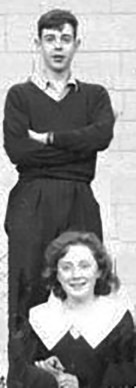
My friend Jacqui Bertrand (Stather) died suddenly on January 29th

All who knew Jacqui will remember her in colour! She radiated enthusiasm, anger, joy, outrage, hope, passion and love in equally extravagant measure. She carried these qualities through life and they were undiminished at the time of her untimely death. She leaves behind husband Chris, daughter Molly and sons Robin and Piers and their families, to whom all condolences go at this most difficult of times.

She was my dear friend for 56 years and I shall miss her more than I can say.

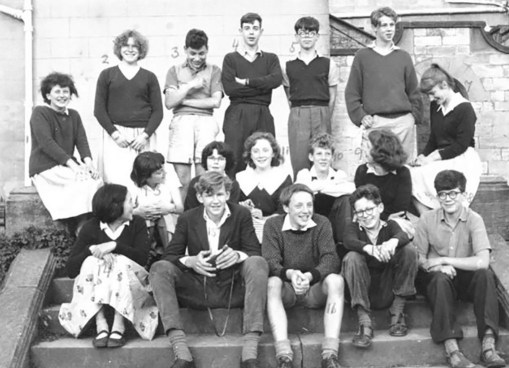
JONESY & JACQUI - 1962

Jonesy and Jacqui
Wennington School

JACQUI

What are we to do?
What are we to do
as we stand like grounded birds
shocked by rain,
staring into the veil
where once was clear light?

What are we to say
at this time of knives
where presence is
in a moment gone
and absence is all?

Count your heartbeats
one by one as you fold
into your grief. Not as if to say,
“I am still here inside my life”,
but to declare that for as long
as that old muffled bell still booms,
your crazy rainbow self will hear it
and you’ll be, as ever was,
just one heartbeat distant.

FORM PIC

JACQUI

FIRST LIGHT by Brian Eno and Harold Budd

Posted in Uncategorized | 9 Comments

POET BLOGGERS 2018 # 3

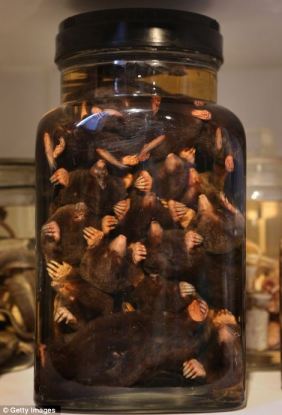
In a glass cabinet amongst the packed and stacked exhibits in the extraordinary Grant Museum of Zoology and Comparative Anatomy on University Street in Bloomsbury, there is a jar of moles. Fascinated, I sat at a table opposite the exhibit and wrote them this poem.

A JAR OF MOLES

A JAR OF MOLES

Amongst the racks of skeletons,
the glass-cased arthropods,
the frozen flights of butterflies,
the stalking bear, a jar of moles.

Like a pickled audience, they float,
hands in mid-applause, their mute
approval a thing of palms and fingers,
viscous suspension hiding faces,

lumping bodies into a mass of
saturated velvet. The brown bear
straddles a staircase, permanently
spooked. A rhino, all bleached

scaffolding behind a lowering skull,
shambles permanently west. Even
the pinioned butterflies have dignity,

a sort of poise, stabbed in their abundance
against an artificial sky. The moles
just hang in alcohol, their stack of hands

not pressing air or palm to palm,
but reaching out like engineers
towards the blind remembered soil.

Posted in Uncategorized | 2 Comments

POET BLOGGERS 2018 # 2

DREAM DAD

I had a dream about my father.

And in the golden mean between its full embrace
and its breaking splinters, lapping and overlapping like a fractured bell,
a truth was shrill and clear.

            Maybe if I had said, if he had said, “I love you”
            during the time of his dying.

But we passed on those chances, settling instead
for our arms entwined as we leaned in together,
like awkward windblown trees locking branches,
on greeting, at parting.

Maybe if we had persevered beyond that timeline
separating tousled hair and handshake,
persevered across the interzone, still able then –
      stumbling both within the space between,
         one grizzled cheek against another,
            bony shoulder into chest –
to hear each other breathing.

Maybe if we had persevered against
that space between,
then your body in death
      (the broken nose that rose above
      the sunken cheeks, the slightly parted lips,
      the marble ridge of your forehead,
      the hair slicked back as in life)
would have yielded up for me alone one final breath.

I cried then as a son cries by his father’s body.
And I cried as I walked away for the space inside,
which was surely still the space between.

And, in part at least, this dream now speaks
to all the crying since that time, arising from a space inside,
which is surely from the space between.

      Love is never the answer, even when it seems so shrill and clear.
      Love is the same questions, lapping and overlapping
            like so many tumbling bells.


NOCTURNES III by Morton Laurisden – Sure on this shining light.


Posted in Uncategorized | 15 Comments

POET BLOGGERS 2018: Hope Springs

After a lengthy period of not writing any poetry at all, I was delighted to be ambushed late last summer by several poems – or rather opening salvoes from them – more or less simultaneously. I was in Paris, sitting on an accommodating bollard facing the left portal of Notre Dame waiting for the family to emerge from Notre Dame Cathedral. Out of habit I had my notebook with me and lacking any other source of words, I was leafing through the dusty pages when the various figures, sacred and profane, crammed beneath the triangular gable above the double doors begun to speak to me. Resistant after years of firm if undogmatic unbelief (if an absence of an ideology can be said to be undogmatic), there was no sense of my being, somewhat late in the day, washed in the blood of the lamb. But it took few moments before I recognised the process as being the first few stammers of a poem in the making. So down went the hesitant utterances and, very gratifyingly, the old routine got under way again. This modest skirmish was repeated several times as, day-by-day, we made our way around the city. A Gare d’Orsay poem is still on the blocks, as is an autobiographical piece about my days and nights wandering the Boulevard St Michel as a too-cool-to-live 18-year-old dumped for summer on a posh family living in decidedly un-bohemian Neuilly.

What follows is the product of a series of unconnected health checks that took up the remainder of the summer holiday after our return from Paris. Passing over weeks through profound anxiety into a state of strangely benign indifference, I pondered the nature of hope and from these reflections the poem below emerged, its current form only taking shape hours before posting it to these pages.

HOPE SPRINGS

HOPE SPRINGS

When Pandora opened the lid of the box, hope alone
in quiet defiance hid beneath the rim. And then grown bolder
she tucked in her shabby lot with the dust and destruction
and blew out into the world.

I met her in a strip-lit corridor. She looked pale –
more patient than doctor. Strange that here between
the hand-wash stations and the drug cupboards
hope should look so hollow-eyed.
The lights too harsh? Or the expectations too high?

Hope was one before me in the supermarket queue.
So sad her choices, scattered like bewildered strangers
finding themselves unaccountably in the same place.
Quick-fix items for a moment’s solace, sugar-heavy,
full of shallow promises. And that newspaper,
the pauper’s almanac, with what and who
and where and why folded like open secrets
into its temporary sheets.

Sometimes it seems that hope is a vapour
caught inside my clothes. I catch its tang as old-time
barroom fag smoke, a miasma I trail in spite of myself.
So I stand upwind of stiff breezes, or where
the pavement airshaft lifts it inside cleansing steam
past the balconies, past the windows, past the rooftops.

But for others it’s like some weird cologne;
they turn as I pass and follow in my slipstream.
We fashion, at such times, a chain of dreamtime links,
rattling our reckless certainty through the halls and corridors,
the bedrooms and the cloisters, the wards and cells,
the arrival and departure lounges.

Hope as phantom, hope as hive-mind drone, hope as marsh-gas…
Hope is, in truth, a tumour close to the heart, inaccessible
to the stoical surgeons with their probes and spatulas.
It feeds at the fuse-point of the white and red, the coming in
and the passing out. And even when it seems as though
for you a night sky like no other folds down your light into itself
as if the stars themselves are going out, hope will metastasise.
It animates electrolytes; it floods your wilderness of roots and shoots:
it melts the filaments of heartbreak and despair.
Hope has you at your open window, watching the black smoke rising
in spite of the rain. Hope has you at the garden gate
whilst beyond they’re beating down the bracken.

Hope has you, wedged between your shrinking bones,
wrapped inside the great stiff leaves that are now your skin,
and you still vigilant for the flapping door, the ticket-of-leave
and the steady light beyond.

HOPE SPRINGS out loud:


Posted in Uncategorized | 8 Comments

THE REVIVAL TOUR – POET BLOGGERS 2018

25660403_388550261602817_7144419901119065004_n

I’m delighted to be supporting actively the Kelli Russell Agodon and Donna Vorreyer blogger poet Revival Tour. Everything’s explained by my old friend and fellow contributor Dave Bonta so I shall simply post accordingly.

Starting with a double header. First, a straight poem.  At the conclusion of our study of ‘King Lear’, my English teacher, the poet Brian Merrikin Hill, posed to our 6th Form  English class a question. Given the extremities of suffering through which Lear had to pass in order to approach that most fundamental of understandings, what it is to be a human being, which of the two polarised existential states would you select: that of the wise but unhappy Socrates or that of the ignorant but untroubled pig

AFTER READING ‘KING LEAR’

The secret of happiness, you see, is not found in seeking more, but in developing the capacity to enjoy less.
SOCRATES

“What would you rather be?”
our teacher asked us.
“Socrates, wise but unhappy,
or happy but ignorant pig?”

The gum-chewing rockers
and pony club belles all opted
for pig (although ‘poodle’
was mooted by Katie).

Philosopher poet, I straddled
the moment, caught between
hope and despair. But of course
I chose Socrates – modish

as ever – and smugly I carried
the weight of my burden
into the glorious mess of
my future. Now, with a view

from the hilltop of more hills
but fewer and steeper, it’s time
to take stock. Is Socrates
wiser or simply unhappy?

Wisdom or rubies? The choice
academic so late in the game.
Back then I was clothed
in such confident motley –

the badges, the denim, the blue
shaded lenses (the silk and
the hide and the wool of
conformity). Now I am closer

to naked than ever – poor,
bare and forked and alone
on this hilltop. But in between
one breath and another,

the gap between heartbeats,
I seem to be happy, here
where the pig hunts for truffles
and Socrates dreams.

Several years ago, as an idle exercise in Larkin-esque parody, I wrote a poem called IN PARENTHESES. It rolled around in the back of an e-drawer somewhere ever after until, in search of  potential song lyrics out of rhymed poems, I dug it out and sent it to my musical oppo Steve Moorby for possible addition to the rapidly accumulating body of songs we were writing together for our acoustic/electric trio Moorby Jones…

IN PARENTHESES
(Words: Dick Jones / Music: Steve Moorby)

From the fastness of our dreams
where no clouds obscure the view,
we put aside our petty schemes
and envy deeds that others do.

Is there more to life than this?
we ask at break of every day.
The morning call, the goodnight kiss,
the foot upon the primrose way?

Safe or sorry, choice is clear:
not pig in sty but Socrates.
Or yield to ignorance and fear,
and live life in parentheses.

Continue reading

Posted in Uncategorized | 2 Comments