Under The Lip of Sleep

Posted in font | Leave a comment

GRAND OPERA AND PARLOR JUNK.

GRAND OPERA AND PARLOR JUNK

Tallahatchie Flats, north of Greenville on the banks of the Tallahatchie River. A barren field some 2 acres long. A mighty tent, roped and guyed:
ship’s cable onto 2 foot long stakes. 4 union flags banging in the big, fat afternoon wind…

A long queue straggles. Kids fighting. A big sister hits out at a barefoot boy. A dungaree fool and his sweetheart bust a bottle of Old Crow. Sal Silverheels plays the line, his two spoons dancing
off his knees. All moving slowly through the tent door and spreading like the Big Muddy into the sea…

It’s like a canvas cathedral, all evening light and dust and echo. Fishbone seating filling fast. Popcorn girls in satin shorts and hotdog boys with steaming carts. Too close for comfort, dancers somersault along the aisles, barelegged, wild-eyed. One stops, panting, gleaming. A mother covers
her teenage son’s wide-open eyes. White folk move in packs, brown derbys tilted, shimmy skirts held down. But no one cares. No town cops cruising, tapping billy clubs. There’s a colour-blind connection, first over that gap between their ranks of seats and then, when the tent’s a Deep-South tin roof church fit to bust, no one cares again. All are ripe with joy for tonight.
This is a sawdust Sodom where all will receive another kind of gospel altogether..!

Heavy curtains, like for the biggest parlour window in the world. Four men in undershirts chewing stogies
hang hard onto sisal ropes. A barker runs across the stage cutting the air with his arm. “Let ‘er go!” The ropes are tugged at speed, hand-over-hand.
Bottom corners first, the curtains soar up like geese on the rise. And the sound that passes through that congregation is like a wind through river reeds…

They laugh until they weep against each others’ heaving shoulders. Ole Massa Melon chases the chicken thief up both curtains and through the band. And they dance in their seats and on
their seats and out in the aisles. The Wildcats tease their feet, their legs, their hips, their arms. Tishimingo, Moonshine, Hustlin’ Blues. Trumpet
ducks and trombone pumps the empty air above.. Bass sax bullfrogs, banjo clanks and the big cymbal hisses like a snake. Hoofers leap and spin, each
on a dime. And a long gliding line of boys wearing white ducks and sailors’ tops come kicking down to the front of the stage. High yaller, light brownskin,
gazing high above the raised faces, arrogant apollos to stop the hearts of every sweetheart, boy or girl, who watches and adores.

And then, like the gospel sea, they part and form two tidal breaking waves – step forward, step back, reveal, conceal, reveal. A roaming spot throws a coin of gold and down she comes – it’s gold-necked Ma Rainey, the Mother of the Blues! She strides like a man down
the people avenue, her arms raised, a brilliant grin across a face glazed like bronze, satin and silk across, around, behind in a train. She reaches up and cups a dancer’s face – “Ma pigmeat boy!” she cries, and hits the downbeat twice in the bar. It’s Lost Wandering Blues and the poorboys and the passers-through know what
she means when she stands there pondering, wondering “will a matchbox hold my clothes?” Then she sashays back up to where the girls are kicking high. She tips one tiny chickadee across her lover’s arm and she turns their two heads away. Prove It On Me, is what she wants to know right now. But each lonely wife and jilted lover yells hallelujah, sing it, sister when she tells them all
“They must’ve been women ‘cause I don’t like no men!”

All that sweat and sparkle, high-heel sneaking, cussing out the band (who laugh and fat-lip bronx cheers back),
kisses blown and back-of-hand secrets told and then it’s nearly time to strike the stage and pull the guy-lines. So she breaks their hearts with the truest of them all, “See See Rider, see what you have done done, Lord, Lord, Lord, made me love you, now your gal done come”. Then it’s all brass and ballyhoo with the whole damn show down front and Stack O’Lee Blues for all to sing. And then it’s the last dance – brothers and sisters for one night only doing the black bottom all the way down the aisles and back to where she’s shaking it out between two slick-haired, snake-hipped boys in sharkskin. And then Ma Rainey beats the air – 1, 2, 3, 4 – and all that’s left is echo on echo and feathers and straw adrift in the spotlight beam…

And they flow out into the night like a storm drain in flood.The jive-ass white kids swing into their Chryslers and Fords; the black folk walk through rising dust to the railroad station. And behind, the men with stogies wrestle out the stakes and let the guy lines slip. Eight trucks and buckboards take the weight and drive off into the night. And it’s white steam and smokestack sparks from Ma Rainey’s train of troupers, pulling out of Tallahatchie Flats to cross the Greenville Trestle west to Lufkin, Deep East Texas where there’s a fairground and a thousand and more starlight dreamers, black and white, fisting dollars, fixing collars, raising hollers into the blue dark.

Posted in font | Leave a comment

AS IT IS SAID

As it is said,
through the bleak
and hollow laugh
whereby we
accommodate
the grimmest truths,
that no good deed
shall go unpunished,
so it is that everything
of light and beauty
carries close behind
its shadow self. Thus
it is that the price
of love shall be grief
and the gall of grief
shall match within
the mirror the light
and beauty of that
love. Such is the
symmetry that pairs
the seasons, gives
the sun its heat,
the moon its ice
and takes us from
our mother’s arms,
along our way of
chance or choice
and so to sleep.

Posted in font | 2 Comments

Hiatus

Hiatus is a poem set to music by Gemma Moorby of MoorbyJones. The song was created on the piano and this audio file is a rough recording that Gemma did for me so as to work towards a bass part. We’re currently transposing the song for acoustic guitar, electric guitar and bass. Once completed, we’ll record Hiatus and mix and master it, possibly for single release.

HIATUS
I purse my lips,
release a breath
too soft to shift
a candle flame.

I purse my lips,
reverse a breath
and for the heartstop
in between, hiatus.

I imagine falling worlds
and stars in birth,
from dark to light
to dark again.

And this is how
we live inside
the days – looking back
through gilded windows,
looking forward
round darkened bends.

I purse my lips,
release a breath,
too soft to raise
a single hair.
I purse my lips,
reverse a breath
and live within
the heartstop
in between.

Posted in font | Leave a comment

HOPE SPRINGS

For a couple of years – from its provenance somewhere in the quietest part of lockdown – I’ve been moving this poem towards a final draft. Paul Valéry (apocryphal?) tells us that a poem is never finished, only abandoned. So as these pixels embed themselves, here I go, off into the mystic!

HOPE SPRINGS

When Pandora opened the lid
of the box, hope alone in
quiet defiance hid beneath the rim.

And then grown bolder
she tucked in her shabby lot
with the dust and destruction

and blew out into the world.
I met her in a strip-lit corridor.
She looked pale – more patient

than doctor. Strange that here
between the hand-wash stations
and the drug cupboards hope

should look so hollow-eyed.
The lights too harsh?
Or the expectations too high?

Hope was one before me
in the checkout queue.
So sad her choices, scattered

like bewildered strangers
finding themselves unaccountably
in the same place. Quick-fix items

for a moment’s solace, sugar-heavy,
full of shallow promises. And that
newspaper, the bigot’s almanac,

with its what about who and where
and why folded like sweepings
into its temporary sheets.

As for me, sometimes it seems
that hope is a vapour caught inside
my clothes. I catch its tang as

old-time barroom fag smoke, a
miasma I trail in spite of myself.
So I stand upwind of stiff breezes,

or where the pavement airshaft
lifts it inside sterilising steam
past the balconies, past the windows,

past the rooftops. But for others
it’s like some weird cologne; they turn
as I pass and follow in my slipstream.

We fashion in such moments
a chain of dreamtime links, rattling
our reckless certainty through

the halls and corridors, the bedrooms
and the cloisters, the wards and cells,
the arrival and departure lounges.

Hope as phantom, hope as
hive-mind murmur, hope as
marsh-gas. Hope is, in truth,

a tumour close to the heart,
inaccessible to the stoical
surgeons with their probes

and spatulas. It feeds at the
fuse-point of the white and red,
the coming in, the passing out.

And even when it seems
as though for you a night sky
like no other shuts down your light

into itself as if the stars themselves
are going out, hope will metastasise.
It animates electrolytes; it floods

your wilderness of roots and shoots:
it melts the filaments of heartbreak
and despair. Hope has you at your

open window, watching the black
smoke rising in spite of the rain.
Hope has you at the garden gate

whilst beyond they’re beating down
the bracken and the brambles.
Hope has you wedged between

your shrinking bones, wrapped
inside the shabby folded leaves
that are now your skin, and you

still vigilant for the turned key.
the arcing door, the ticket-of-leave,
and the steady light beyond.

Posted in font | Leave a comment

Posted in font | Leave a comment

KODAK by BLAISE CENDRARS

Kodak, Blaise Cendrars’ series of American vignettes, was published in 1924 by Stock.The edition – much sought after on the rare book market now – included a portrait of the poet by his friend Francis Picabia. In Kodak Cendrars employs a literalism consistent with his intention of reproducing in words a collection of snapshots of 1920s New York. I’m beginning with the first eight poems.

KODAK

ROOF GARDEN

For weeks the elevators hoisted hoisted
crates crates of compost
Finally
Thanks to cash and patience
The shrubbery is blooming
The lawns are a tender green
A vital spring gushes forth between the rhododendrons and the
camellias
At the summit of this edifice this edifice of bricks and steel
The evening
Waiters grave as diplomats clad in
white lean out across the chasm of the town
And the flowerbeds are alight like a million tiny multicoloured
lanterns
I believe Madame murmured to the young man with a voice
tremulous with suppressed passion
I believe that we might do very well here
And with a sweeping gesture he displayed the vast sea
Its ebb and flow
The riding lights of its huge ships
The towering Statue of Liberty
And the mighty panorama of the city crisscrossed with shadowy
perpendiculars and glaring light

The old philosopher and the two billionaires are alone on
the terrace
Beautiful garden
Great banks of flowers
Starry sky
The three old men stand silently listening
to the laughter and the happy voices rising
from the bright windows
And to the murmurous song of the sea that mingles with
the gramophone

ON THE HUDSON

The electric dinghy glides noiselessly between the multitudes
of ships at anchor in the immense estuary flying
the flags of every nation of the world
The great clippers loaded high with Canadian timber
furl their huge sails
The iron steamers belch out torrents of black
smoke
A population of dockers from every race in the
world bustles within the turmoil of sirens and steam-whistles
from factory and train
The elegant launch is fashioned entirely from teak
Rising from its centre is a cabin resembling that
of a Venetian gondola

AMPHITRYON

After dinner served in the winter garden amongst
the groves of lemon trees jasmine orchids
There is a ball on the lawns of the illuminated park
But the principal attraction is the gifts sent
to Miss Isadora
Of particular note is a ‘pigeon’s blood’ ruby
of a size and brilliance beyond compare
None of the young girls present possesses a gem
to equal it
Elegantly dressed
And vigilant detectives mingle with the crowding guests
to watch over and protect this jewel

OFFICE


Radiators and ventilators running on industrial gas
Twelve telephones and five wireless radio points
Marvellous electrical filing systems containing
countless industrial and scientific dossiers on
a multitude of subjects
The billionaire only feels truly at home within
this place of work
The huge windows look out over the park and the city
Each evening the mercury vapour lights shed
a soft blueish glow
It is within this place that demands to sell and to buy
sometimes topple stock markets across the wide world

YOUNG GIRL

A light dress in crepe de chine
The young girl
Elegance and wealth
Hair a tawny blonde within which shine a string of pearls
A face composed and calm reflecting both sincerity
and kindness
Her wide sea-blue eyes almost green are
clear and bold
She has about her the special downy-fresh and roseate tint that
suggests the privilege of the young American.

YOUNG MAN

He’s the Beau Brummel of Fifth Avenue
Cloth-of-gold tie stippled with a froth of diamonds
A suit in metallic fabric pink and violet
Ankle-boots in genuine sharkskin each
button a tiny black pearl
He flaunts pyjamas of asbestos flannel another suit
fashioned out of glass a crocodile-skin waistcoat
His valet scrubs his gold coins with soap
He packs only brand new scented banknotes in
his wallet

WORK

Criminals have just blown up the railway embankment
bridge
The carriages have caught fire at the bottom of the valley
The injured swim in the boiling water seething from the
ruptured engine
Human torches run amongst the wreckage and the
jets of steam
Other coaches dangle suspended 60 meters up
Men carrying electric torches and acetylene cutters
clamber down the valley track
And in silence the rescue is swiftly organised
In the shelter of the bulrushes the reeds the willow the
waterbirds create a happy commotion
Dawn is long in breaking
But already a team of one hundred carpenters summoned by
telegraph arrive by special train to begin to reconstruct the bridge
Bang bang-bang
Pass me the nails

TRESTLE-WORK

If you come across a certain river or a deep valley
you’ll cross it by a wooden bridge until such time that
company revenue permits construction of one
in stone or iron
American carpenters are without peer in
the art of constructing these bridges
You begin by laying down a hard rock bed
Then you erect your first trestle
Which will support a second then a third the
a fourth
As many as it takes to reach the level of the bank
On the last trestle two beams
On the last two beams two rails
These audacious structures are neither reinforced by
a St Andrew’s cross nor by iron T-bars
The whole is held together just by a few supports and a few
bolts which determine the gauging of the trestles
And it’s what it is
It’s a bridge
A beautiful bridge

Posted in font | Leave a comment

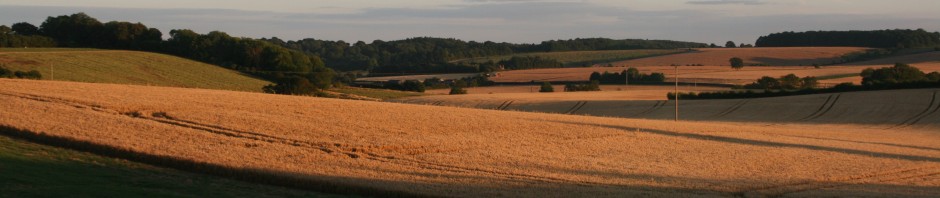
WHITE FIELD IN BARLEY

WHITE FIELD IN BARLEY

Here in my August days,
at the top of White Field
I open my hand; I spread
my fingers and I palm
the barley heads all down
the slope to the lane below.

She leaves Keeper’s Lodge
at 4.00 in the morning.
Dew on the nettles.
The sun a silent partner
to the pale full moon.
An owl calls once
in the willow as the dark
gives way to the pearl
before dawn. In one hour
up at the big house
she will be kneeling on
the kitchen flags with
her bucket and its cloth.
She must clear the black
grease beneath the spit
before Mr. Howarth stands
in the doorway legs apart
picking his teeth. He’ll
be silent, but he will
judge. All she cares is
that she is done and
on her feet for when
the ostler and his boy
Simon are in to break
their fast. Simon has
eyes like diamonds and
she is sweet on him,
but knows that he shall
go for a soldier as soon
as the harvest is in. So
this time she must speak
or take a broken heart
into the long winter nights.

At the top of White Field
she opens her hand; she
spreads her fingers and
she palms the barley heads
all down the slope to
the lane below.

He hefts the scythe, his
father’s before he died
beneath a thrashing horse.
He has a canvas bag,
an old hole sewn tight
and a new strap secured
made from his grandda’s
belt. Inside a loaf’s end
and cheese in a damp rag
and cider in a stoneware
jar. And a book with words
and pictures and a space
under each to write in.
He’ll join the men and boys
down on the lane by
the meadow gate. He has
a joke ready in his head,
one to cap Old Japhy’s,
ruder, bolder, a tale that
only a man that’s tumbled
a girl in the straw would
dare to tell at noon break.
He blushes in contemplation.
But how much sooner he
would rather curl up under
the hay wain with his book
for to read like a scholar
is a glory just close enough
to wish for in the night.

At the top of White Field
he opens his hand; he
spreads his fingers and
he palms the barley heads
all down the slope to
the lane below.

The Reverend Stollery
stands at the crook of
the dog-leg corner where
the headrow of Cuckoo Field
is folded into a hawthorn
hedge. Tears are hot in
his eyes and in his throat.
He’s seen death in India
and on the veldt and if
the greatest question of all
were to be asked then surely
it should have been under
those alien suns with the
stink of cordite and rot
wrapped around their heads
by day and night. But this
was doubt by stealth, by
surprise in a cottage ripe
with the smell of thatch
and plaster. Maybe it was
Esther’s great abandon
with the baby in her arms,
a grief so visceral that
his heart finally twisted like
a thing sprung from a trap.
Men will kill for an idea, for
bars and colours on a flag.
This they will do and he must
hear their prayers and curses
as they go to join their khaki
pals who’ve gone before. But
now he stands where peewits
and larks fill the August sky
with joy abundant and there’s
the question: What God wants
a child’s soul that knows no
greed or rancour? Jesus and
his sunbeams. Now the sun
mocks light and the Reverend
steps into a darkness deeper
than any night. He might
as well be blind as a stone.

At the top of White Field
he opens his hand; he
spreads his fingers and
he palms the barley heads
all down the slope to
the lane below.

It’s just past midnight.
In Bluey Penfold’s gunny sack
the unsprung teeth of his
rabbit traps chatter. Deep
inside his flapping coat, four
rabbits nestle, spines snapped
like twigs, but warm still.
He can see in the dark like
the cruising owl and his feet
find the spaces in between
the brambles and the tussocks
with the deer’s certainty.
Before the next church bell
each shooshi will be turning,
spit-roasted over the yog
that Ruby’s kept fed since
evening. The chavvies will be
wide awake and crawling out
of the bender. The grais are
out of their harnesses and
on long ropes along the hedge.
The waggon shafts are up,
their ferrules resting on two
props against the moisture
of the dawn. We the foki live
not with you but beside you,
ghosts in motley, trading on
your fear, dark as berries,
speaking the poggado-jib,
but loving, losing, fighting
and dying in our time, just
like you, little do you care.

At the top of White Field
he opens his hand; he
spreads his fingers and
he palms the barley heads
all down the slope to
the lane below.

Here in my August days,
at the top of White Field
I open my hand; I spread
my fingers and I palm
the barley heads all down
the slope to the lane below.

31.07.23

Posted in font | Leave a comment

ICARUS ASCENDING – a song lyric.

ICARUS

Posted in font | Leave a comment

BINNERS

This poem has a curious provenance. I wrote it 14 years ago in a white-heat continuity of days. Once started, it spilled out prolifically in long sequences of verses and stanzas – to such an extent, in fact, that I had to carry a mini-notebook in my back pocket so that I could capture the verbiage as it arrived and spilled out. I drafted and re-drafted rapidly into my main notebook and completed a first full version of the longest poem I had ever written some ten days after its initial appearance.

I’m not sure what provoked so fluid a flow. I’d had the opening section – headed Superstructure in this draft – hanging around for several years. The original notion was an anecdotal account of experience working in a mental hospital laundry, but it never got further than a description of the huge gothic edifice that housed the institution. In spite of the fact that my three months in that dreadful place were full of incident, the anticipated graduation to a depiction of what actually went on never occurred.

As so often happens, it was an entirely unconnected stimulus that sparked off the next stage of the poem. During the ongoing (and seemingly never-ending) process of unpacking and sorting documents after our house move, I came across some research and planning notes I had drawn up for a projected production of Peter Schaffer’s play Equus. I had homed in on the play’s central theme – that of the psychiatrist Dysart’s growing fascination with the perverse, amoral theology that has driven his 17-year-old patient Alan Strang to blind several horses with a hoof pick. Appalling though the act is and in spite of the explanatory pathology that emerges through analysis, Dysart becomes increasingly aware of the sacrifice of visceral passion and engagement that Alan must make in order to be liberated from his compulsions. Passion, you see, can be destroyed by a doctor. It cannot be created, observes Dysart. And later, as a cri de coeur: All right! The normal is the good smile in a child’s eyes. There’s also the dead stare in a million adults. It both sustains and kills, like a god. It is the ordinary made beautiful, it is also the average made lethal. Normal is the indispensable murderous god of health and I am his priest.

The planned production never went ahead. A combination of concern about suitability for an all-ages school audience, probable casting difficulties and a sense that Schaffer presents his compelling scenario just a little too tidily had me tucking the notes away and moving swiftly on to something more negotiable. So rediscovering them so long after their compilation gave them a renewed freshness and impact. But instead of causing me to reflect wistfully on the production-that-never-was, I found myself thinking about the poem-that-was-yet-to-be. And I realised within a moment of revelatory shock that aspects of what I had seen and heard in that mental hospital conformed precisely to the informing agenda of Equus. I realised – maybe for the first time fully – that I had been witness to a demonstration of that nexus between the limits of conventional human behaviour and the abandonment and chaos that lies beyond and that it had shocked me to the core. The poem investigates – as maybe only a poem can – the true nature of my perception of the event witnessed at the time and what, with the understanding that only comes with time, it meant to me now.

:::

When I posted the first draft of the poem, a combination of factors inhibited commentary beyond a handful of (very helpful) responses – its sheer length, the density and maybe obscurity of its infrastructure, the judgement that it simply wasn’t a very good poem… All of those elements and more will be in place again this time – compounded, I guess, by the sad fact that my readership has diminished during the past year! But it’s time for a second airing so here it comes again in its second draft.

BINNERS

SUPERSTRUCTURE

Even then it was a dour anachronism, beached
at the tideline of a bleak estate, a great beleaguered
pile – Victorian hubris raised in red brick precipices,
gothic crenellations, totem chimneys, tottering over

fields of scalloped slates. Built by honest burghers
to house the footsliders, the wobblers, the pagan
visionaries, the nihilists, the fallen doves. And the pile squatted on its hill of bones, hoarding in reality

a sad communion of cockeyed optimists, lost souls
whose only act of madness was to let loose hormones in their teens like red balloons, old crocks and crones beyond repair and one or two of the truly damned or blessed.

:::

INFRASTRUCTURE

I work in the asylum laundry,
dawn ‘til two, forking bedsheets,
wet and grey like tripes,
into the drums to cook.

Booted and wrapped, shiny
white in oilskin aprons, angel
butchers, we move through steam,
feeding the ironing room.

We, the furtive and the cruel,
duck behind nicknames, aiming
to pass unnoticed or unchecked
within this strange nation:

Fish, the foreman, with the
glaucous eyes; me, the Friar,
for my pelmet fringe; and
crew-cut Stig of the lipless

v-shaped smile, like a deft
two-stroke razor slice. Ours
is a realm of clouds, high windows
sweating kitchen dew and vaporous

doorways like dream portals, blurred
against white streaming tiles. And
passing between these shape-
shifting airlocks, the strange

quotidian traffic. We sidestep
their world like unshelled crabs,
sidling our tasks between sheet
heap and drum, heads down

and purposeful, breathing only
our own air. And they move
between us in their own
fashion: the dancers, shapeless,

ageless in their smocks,
spinning and turning to
secret tunes in undiscovered
keys; the counting man

who circuits the vast estate,
enumerating fetishes – certain
lintels, keystones, door handles,
a smoked glass windowpane,

a beech tree root, tapping
each one with crooked
magic forefinger and then
moving on to realign

some other crucial fuse
while the sun is high.
(I watch him secretly,
like a bobbing bird at work);

and last, within the dust
of the parade, precarious
as a shard of glass,
red Mary. Fizzing on

the threshold, she tests
the air. Her top lip
puckers, lifts over
a black bucket of

horse teeth. She snickers
and pushes at her brush-
fire hair, a corolla
of torn flames, the colour

of rust. Pale, pale
blue eyes switching and
slipping, making of the world
a place of fumes

and snapped filaments, just
an inkblot atlas to guide her
through black land
and fathomless sea.

And it’s here and now,
within the splay and straddle
of her limbs inside the doorway,
between one clumsy

heartbeat and the next,
that there might be
deliverance – a rough facsimile
of love as nurse or porter

turns her round, the pressure,
gentle, solicitous, the voice
a fuzzy burr, back along
white corridors, white corridors.

But no one’s there
and Stig is sprung-wound
and ticking close beside me.
I can smell his musk

through boiled linen and suds.
Dipping armpit deep into the drum,
he tugs out cotton knickers,
red as a haemorrhage,

and dangling the deep, sad
weight of them like a toreador,
he edges forward. His thin rudiment
of mouth beaks into a pouting kiss

as he sashays onto the walkway
where she stands. In that sweat-
heat, she is, in this moment,
rabbit to his serpent.

Fish draws hard on a cigarette
and turns away, but I am
complicit, witness from the start,
hiding amongst the rank

garment foliage like a naturalist,
sensing that what must now
transpire will strip us
to the quick. Clocks stop

inside that doldrum pause.
And she begins to keen,
a sound thin and high,
like wire hard drawn

through the membrane of
the air. And Stig two-steps
sideways, flicking the bloomers,
chanting on a breath:

“Crazy Mary, crazy bitch,
come on and fuck me, crazy
bitch, come on”, and laughing
high and wild like a child

on a rope over water,
innocent and dangerous
in the free air, he dances,
now scampering forward

and back, forward and back
under a blood-red flag.
The air shimmers and stiffens;
then Mary shatters it like

a huge pane of glass.
There is a quality
of sound – the mud-born
eructation from the throat

of a marsh bird, or
some searing midnight
heartbreak called from ridge
or hillside – that curls

around the edge of time
to bear witness to what
we have never known,
should never have to know.

And Mary shrieks from that
elemental place, her mouth
split earth and her voice
magma, sudden and naked

in the wrong world. Stig
stops dead, poised like
a mural dancer. This
raw noise has clogged

the air into something
like fog or dynamite
and our ears ring with it
and we can’t see for tears.

Stationary, rooted, like
a screaming tree, she flails,
ululating from within the
perfect storm, an ecstasy

of rage, crystal-pure and
targetless, uncorrupted by
concern or issue, red-raw
but of itself, primordial.

From this spotless light,
this impeccable heat, stars
and their matter draw
their source. This is

the ultimate release,
a hideous, intoxicating
freedom. Like some twisted
Breughel sower, she scatters

the molecules of reason
into this coruscating wind
and for its duration
both of us are blasted white,

Stig and I, reamed as clear
and vacant as blown eggs.
And now inside the cone
of silence that crowns

the thunderclap, we stand,
Stig and I, each in
his moment, the one
a still life in white and red,

caught at the edge
of the breath before
panic animates; the other
a dumbstruck initiate,

hearing in the soaring
engine of the scream
a wild music, seeing within
the beating Shiva arms

a terrible beauty, the purity
of free-falling water, the
rootless, boundless liberty of
the infant and the lunatic.

Is this how we sunder
gravity, leave the earth
and fly? Is this shame
I feel or yearning?

They come for her and,
with unconsidered skill, they
truss her as she stands
and bundle her away.

The sounds diminish, dwarfed
and dopplered through the
labyrinth beyond and,
in the laundry, drums

grind and roll and steam
embraces. But I am marked
now, an initiate. I know
of their mission this much:

that it’s not to care
and cure but to contain
and then conceal. These
seismic forces must remain

bound in chains, Promethean.
Neither love nor freedom
can survive the fire from
what we might become.

I fork bedsheets, wet and grey
like tripes, into the drums
to cook. And I must wear
this secret like a scar.

Published in ANCIENT LIGHTS, Phoenicia Publishing © 2011.

:::
Posted in font | Leave a comment