We shall not cease from exploration And the end of all our exploring Will be to arrive where we started And know the place for the first time. Through the unknown, remembered gate When the last of earth left to discover Is that which was the beginning; At the source of the longest river The voice of the hidden waterfall And the children in the apple-tree Not known, because not looked for But heard, half heard, in the stillness Between the two waves of the sea. Quick now, here, now, always– A condition of complete simplicity (Costing not less than everything) And all shall be well and All manner of things shall be well When the tongues of flame are in-folded Into the crowned knot of fire And the fire and the rose are one. T.S Eliot (Little Gidding V, Four Quartets)
As an adolescent besotted with the notion that within poetry lay every wisdom worth knowing, this jangled with meaning, but remained just out of reach. In age, it tolls like a bell.
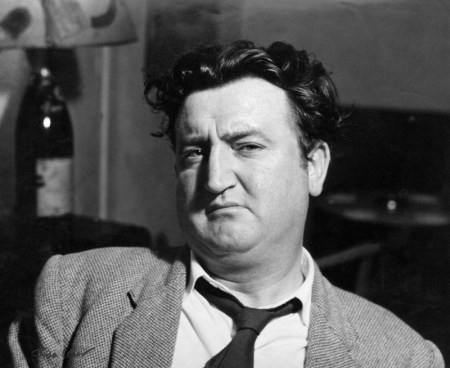
I value kindness to humans first of all, and kindness to animals. I don’t respect the law; I have total irreverence for anything connected with society except that which makes the roads safer, the beer stronger, the food cheaper, and old men and women warmer in the winter and happier in the summer. Brendan Behan
Sometimes, when the tide of self-serving, self-justifying, pompous, trite and sanctimonious flummery is on the rise, in search of a morsel of enlightenment we turn to the simple heart-over-head declaration.
I have known Alan all my life. He lived with us for my first 20 years and remained an integral part of the close family structure even after he moved into his own flat. Indeed, it was my belief up to the age of 4 that all families included an Alan.
He took the spare room in our South London flat in 1938, shortly after my parents married. Alan was ‘our waif & stray’, my mother used to say of the callow 18-year-old youth who moved in. Joking reference was also frequently made – by Alan, as often as not – to the ‘wicked stepmother’ who, on her marriage to Alan’s father, threw Alan and his younger brother out of the house to fend for themselves.
Behind these euphemisms lay real distress and sacrifice. His unworldliness notwithstanding, Alan possessed a keen mind and a fearsome intellect and, in more favourable circumstances, undoubtedly he would have gone on to university. Instead, he was articled to a firm of chartered accountants and was beginning to impress when war broke out. Alan joined the RAF and saw service as a flight lieutenant navigator in Coastal Command seaplanes and flying boats in India, Malaysia (then Malaya) and South Africa.
During the war Alan kept in close touch with my mother and father, regarding them increasingly as the family that, to all intents and purposes, he never had. Although they were only a few years older than him, he deferred to them very much as parental figures, particularly during the early years following his demobilisation and return to professional life. To my father he accorded a deep respect and regard, drawing from him a passionate interest in music and theatre and a tolerant and liberal view of humanity unusual in those years of fierce ideological polarisation. To my mother he gave a love and loyalty that never wavered. His devotion was such that, although he got close a couple of times, he never married, and he remains a bachelor now. And to me from the start, he gave absolute loyalty, never seeking to usurp a parental function or stand duty as a much older brother, but simply being uniquely the ‘Alan’ that for my first 7 or 8 years I assumed to be a standard familial component.
Well into my adulthood, I never seriously questioned the nature of the unconventional triangular parenting that I received. Somehow the roles of each of them integrated seamlessly and, on family outings, boarding school visits, annual holidays and at Christmas, Alan would be there too. And when, in his 60s, following retirement from a senior partnership in an internationally renowned firm of accountants, Alan bought a villa in the South of France, it was axiomatic that my parents would be co-resident with him there.
When my father died at 89, automatically Alan became my mother’s carer, taking responsibility for both the domestic and financial management of her affairs and, increasingly as her frailty increased, her physical welfare. In this final office, right up to my mother’s death in 2008, he always deferred always to me – not out of any sense of yielding to me family prerogative because of the ties of blood, but from his entirely natural grace and courtesy. For my part, as an only child curiously blessed throughout my life by the presence of this man who came to stay, I cherished these last rituals and processes of the family life from which I came. And if I came to question the true character and meaning of Alan’s unwavering devotion only in recent years and to wonder at the balance between fulfilment and pain that, over time, it has brought, I was happy to take my place, this time at a corner of this final triangle, knowing that utter loyalty, gratitude, discretion and selflessness would inform that constancy.
On the morning after the day my mother died, Alan and I spoke on the phone. He had left only minutes before Mum stopped breathing, unable to endure witnessing her last moments and I was telling him how simple and peaceful her passing had been. As we concluded and were saying our goodbyes, having arranged to meet at his flat the following week, he suddenly said, “She was the only woman I ever really loved”. He wanted me to know this, but no response was expected or required and no reference has been made to the declaration in the 10 years since Mum’s death.
Alan is 95 now and still living in his flat in Central London, near Hyde Park. He is very frail and has 24-hour care. But, with lapses in moments of exhaustion, his mind is clear and still he speaks of his incalculable debt to my parents for taking him in and becoming his family. When he too passes the last fixed point of that strange, sustaining triangle will be gone and, very late into my own life, I shall finally become the orphan who remains behind.
AIW
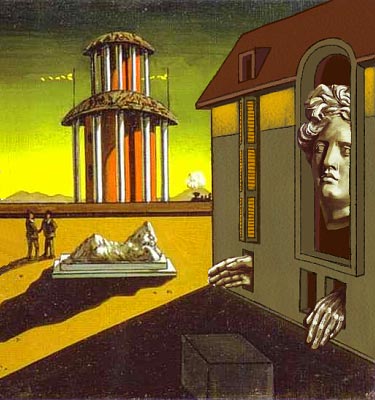
Sometimes I see us as two figures in a landscape, empty
but for us, Chirico-still, our long shadows in alignment at last.
You tended the edges of my life from the start
the good steward, the chatelain. But although the hard, white lighthouse
beam of that other indivisible love shone high above my head,
even then its cutting edge cast light enough to read by.
Now my father’s dead and my mother smiles, lost in her sheets.
And still you radiate (burning up hope and your few years)
that love indivisible whose fanatic heat binds us in that empty place.
Education is what remains after one has forgotten what one has learned in school. Albert Einstein
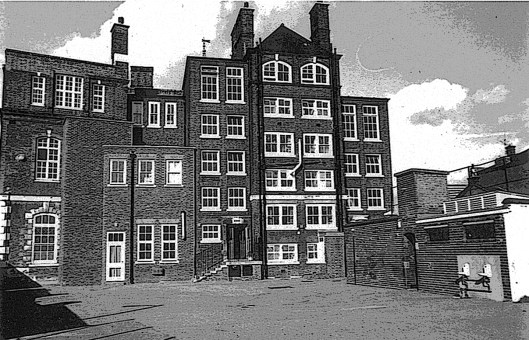
South-East London Boys’ Secondary School, Deptford, South-East London. Struggling my way (sometimes literally) through bone-wearyingly long days in a South-East London boys’ secondary school, I’m rapidly coming to the conclusion that the teacher’s task is a simple polar process. At the northern end, where those boys lightly caressed by the penumbra of the curriculum live, we lob the books from desk to desk at 9.00 am and it’s heads down until 4.00 pm. Then once a year the uniformed drones are herded en masse into a reeking hall to spill the contents of those lobbed books onto file paper and then, after six weeks of exhausted holiday, we resume the lobbing.
At the southern end, where the ostensibly ineducable live, different tasks are undertaken. In this realm of pedagogic shadow much of the time is passed in a climate of threatened or actual violence. It permeates the atmosphere like the humidity before a tropical storm and one awaits constantly the bursting of the clouds. Minor lightning strikes precede the deluge. If the boys aren’t pushing each other over banisters or into lavatory bowls, then somewhere a teacher is using his freewheeling power of corporal punishment for such infringements of day-to-day protocol as wearing a school cap back to front or a school tie for a belt. The cane is used regularly by Mr. Pyle, the tiny, bullet-shaped Headmaster, but the default tool of correction for we foot soldiers here is the rubber-soled gym shoe. There is intense, even heated debate in the staff room as to whether leaving the laces in provides extra tensile strength or whether removing them provides added flexibility.
My first real call to arms comes one day on playground duty. I have positioned myself as usual two thirds of the way up the fire escape steps like a fully dressed lifeguard at the edge of a particularly troublesome sea. I am, as usual, willing the hands of my watch to clamber up towards 10.40 just a little bit faster so that I can blow the whistle and, like a successful Canute, turn back the tide.
And then suddenly, with the inexplicable swiftness of that jungle tempest, the random, scattered groups of boys coalesce into a jostling uniformed mass. Like iron filings to a magnet, hundreds of black-clad figures are sucked inward towards a central hub of activity. A fight – the duty teacher’s nightmare. As I take the iron steps in twos and fling myself into the edges of the imploding throng, seizing boys by their blazer collars and flinging them behind me, a curious booming roar goes up all around. It’s like hearing the crashing breakers of the sea from beneath the waves. I know that my colleagues will be packed around the staffroom window, coffee cups in one hand, crumpled newspapers opened at the jobs section in the other. They will be watching my action keenly, discussing my tactics, judging me on speed, style and control.
Eventually I reach the centre, the eye of the hurricane. A tight-knit ring of grunting, sweating, feral boys holds the ring open, leaning back hard, arms outspread, giving the combatants just enough room to manoeuvre. Their feet scuffle for purchase on the tarmac against the mighty press from behind. As I lurch into the circle, carried forward by my own momentum and the accumulated pressure in my wake, I nearly stumble onto the hunched form of Franny Smith. He’s kneeling on the upper arms of a terrified smaller boy, his head tilted back, wild-eyed, his torso swiveling around, arms extended, hands open, screaming: “Give me a fucking brick! Give me a fucking brick!” And, as I straighten up, Danny Wright breaks through the inner circle in front of me, half a house brick proffered in his fist…
Inklings #12 is something of a departure from form and, to an extent, content too. A few years back, I was preparing a brief record of my immediately post-school year prior to rolling up at Goldsmiths’ College for 3 years of teachers training when, out of the blue, a commission offer came my way from ‘The Mod’ magazine, a short-lived glossy aiming to provide the putative picture of all things mod first time around. I was to write an account of a face’s night out on the Thames Delta back in the days when R&B meant rhythm-and-blues. Hence the previous soft-focus wistful giving way to the present hyper histrionic! Sadly, the magazine folded before I could burst into print and the only account I have of my year out prior to re-entering the education system got spiked. Because of the stylistic artifice that carries forward a (fairly) authentic year’s-worth of high and low jinks compressed into one frenetic night. I make no great claims for it. However, the substance might inform a little and amuse a tad…
Funky Kingston. The innocent abroad… “Bring it to Jerome”, Johnny and I sing as we both shuffle down the line for Friday wages. “Bring it to Jerome” – and Johnny shakes his little brown envelope like The Duchess as I sling chords Bo Diddley-style, across an imaginary square guitar. We head for the car park at a run, dodging round the 9-to-5ers trudging home to a cooked supper and a popping gas fire. Johnny and I are going to pick up Anne-the-Man and Thick Mick then head for the Kingston mods’ GHQ, The Crown by the Apple Market. The plan is standard: too much Merrydown cider followed by midnight chorusing in the churchyard followed by oblivion and most of Saturday lost under the covers.
Johnny leans on the horn at around 7.00. I look out of your bedroom window but the old Thames van is just out of sight. I can place it by the plume of blue smoke and the guttural chunter of a holed exhaust. I check myself in the full-length mirror on the wardrobe door. Looking good. I’m wearing my pink shirt – fly-front, inch-and-a-half deep tab collar, from Man Boutique in Eden Street – under the rolled-edge-lapelled silver-grey herringbone jacket (Cecil Gee). Black knitted inch-wide nylon tie with a loose Windsor knot. Knuckle-chord black hipsters and the Annello & Davide Cubans, bought last weekend in Brewer Street. I run the knife-handled steel comb carefully across the fringe to get the fall just right and then take the stairs two by two. I pause at the front door, the air lock between two worlds. And then, the Cinderella Fella, I spin off into the night.
Thick Mick’s in the back of the van, stretched over the spare tyre. He’s fiddling with a 20-pack of Camels, trying to get one to jump into the breech by flicking his thumb against the bottom. Johnny told him weeks ago that it really impresses the birds and he’s been practising ever since. Johnny’s girl Anne-the-Man is sitting in the front seat. She’s had her hair cut even shorter and she looks up at me through panda-rimmed eyes. Anne-the-Man because of that flattop brush-cut, but there the resemblance ends. A tough option next: she’ll have to sit on my lap as Johnny throws us all around the five minutes of suburban avenues on the way into town. Which works out pretty well for me and I’m hoping my passenger too.
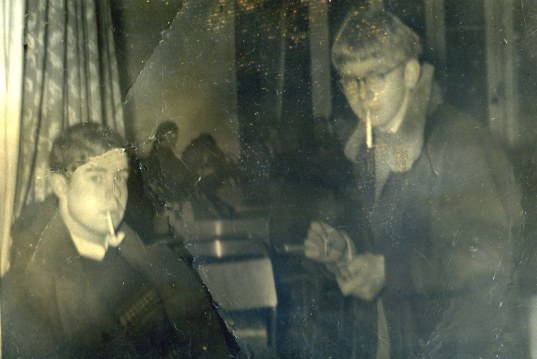
Johnny gets them in and Anne looks everywhere but at me, like butter wouldn’t melt. Thick Mick feeds the jukebox. He’s excused buying rounds because he always gets the order wrong so Johnny siphons off his coinage in kind. Soon the bar pounds to The Pretty Things’ Rosalyn and the business of the night begins. By 9.30 it’s Mod Central. You can’t move for mohair, Shetland wool and tattersall checks. Toshak elbows his way through the faces and pushes Johnny along the bench. He’s wearing his maroon bluebeat hat and a Fred Perry shirt and he’s smoking a Black Russian. He leers down the line – Johnny G., Anne the Man, Mick, me – and shaking his closed fist like a Latin percussionist, he lets slip a blue bomber. It bounces once and Johnny snatches it on the ascent and slips it between his teeth. Soon you’re all humming like bees and not a coin has changed hands. Toshak’s generous with his medicaments, but the price you pay is a temper that turns on a sixpence. He’s been banned from every other pub in Kingston, Richmond and Twickenham for disturbing the peace, causing an affray and just the once so far, ABH.
Things jump into top gear when it’s my round. I’m up at the bar waving my ten bob note like a bookie’s runner with a bet and I bump into a geezer on the turn with a couple of pints. Not much gets spilled but it’s on the new shirt. I look down; I check the damage. Cold and wet enough. Time to look up and make my play.
Suddenly it’s shit or get off the pot time. I went to boarding school; I cried on my last day there a year ago; I’m going to college in the autumn; I live with Mum and Dad in the big corner house in a tree-lined avenue. I’m a sham, here on the wild frontier. Beneath the glam I’m still a stranger in a strange land. But since wage-earning at the glasses factory out here in that so-long-anticipated Real World I’ve found a sort of urban stride that carries me where I know I have to go. No one knows me from before and in this bright new peacock country, intoxicatingly, I am who I say I am. All those hours of closeted dress rehearsal in classroom and dormitory have paid dividends and here, under the lights, the lines learned, the costume fitted, the curtain raised, I believe it too.
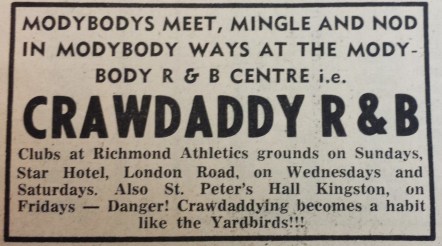
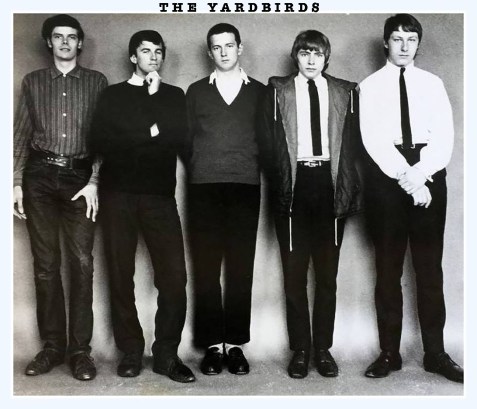
So, because the shirt’s new and clothes maketh the man, there are protocols to be observed. Just before I go eye-to-eye, I take in a 3-ply midnight blue, 4-button tonik suit, cut by a master and then hand-stitch finished, wrapped around a Ben Sherman Oxford button-down and a polka-dot slim-jim tie. This guy’s a Face. How come I don’t know him from across a score of crowded rooms? But I do – from bandstand close-up. It’s Eric ‘Slowhand’ Clapton, lead guitarist with The Yardbirds, the band that took over at the Railway Hotel when the Stones went into orbit and who now play down the Richmond Athletic Ground where we go every Sunday. It was Johnny’s mate Ealing Steve who first wrote ‘Clapton is God’ in indelible laundry marker across the booking office window in Richmond Station over the road from the Railway Hotel. Now municipal walls across Kingston and Richmond are telling the world like it’s the second coming.
Time freezes, like on Doctor Who but in colour. In the thumping silence I notice that his Ben Sherman’s carrying more light and bitter than my fly-front and my pill-dry mouth dries out some more. I can feel a shit-eater’s smile tugging at the corners as I compose your speech.
“Oh, sorry, man”, Eric says, putting the glasses down on the bar. “I wasn’t looking. Here”. And he tugs out a blue polka dot handkerchief from his breast pocket and hands it across. As I’m holding it like it’s a fragment of the Turin Shroud, he’s only turning back to the bar and ordering me a pint, “…and whatever your mates are having”.
So that Sunday night as usual the pack heads down the Crawdaddy in Hooray-Henry country, the Richmond Rugby Club. I cop a pillion lift from Toshak, the Lambretta Loony. We two-wheel drift into the car park alongside a pair of tooled-up Vespas, all headlights and squirrel tails. Weekend mods: Toshak kicks the stand away from one and they both tip over. Outside pill-consumption he’s got a real problem with cultural excess. He says it brings the cause into disrepute. A true zealot.
Johnny and Anne are waiting by his clapped out old van and together we sashay down the outside of the long queue. Flash Harries, all five of us, stepping between a couple of schoolboys and the very classy bird taking the money and rubber-stamping the hands.
“We’re on Eric’s guest list, doll,” says Toshak, his hat tipped forward and his Madras cotton jacket swinging from his crooked forefinger. “Toshak, Johnny H., Anne the Man, Thick Mick and DJ”. We swing into the half-full rugby club bar. Nearly all righteous faces with just a sprinkling of art students in beatnik duds and trippers in Millet’s parkas and catalogue hipsters. Close to phony image overload, I breathe deep and close my eyes. “I believe”, I tell myself three times over. And third time lucky I do.
The empty space is still more rugger bugger’s romper room than a throbbing R&B venue, for all that Marvin Gaye’s giving out Can I Get A Witness? over a crappy sound system. Toshak goes to get some beers in; Mick’s picking up 19 Camels he’s just launched all over the floor; Johnny goes for a piss before the band fires up. And Anne looks at me for the first time that evening. She’s got one of those lopsided smiles that go with a head tipped sideways and blue eyes scrutinising. Bells ring and worlds collide. She doesn’t say anything, just gives the slim-jim a tug and kisses me full on the lips. Then Thick Mick straightens up with a geriatric grunt; Toshak ambles over with five light ales between his fingers; Johnny returns from the bog, shifting his tackle into position behind his cords; Anne studies the ceiling with those panda-rimmed baby blue eyes; I am alone with my thoughts.
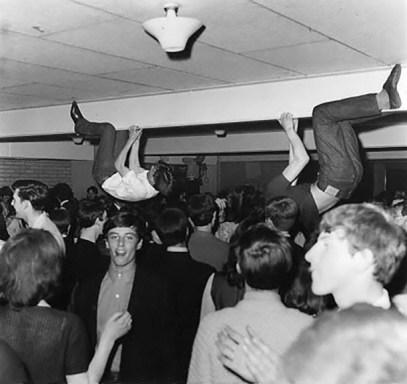
Within the hour it’s another world. It’s like being tied to the rail tracks in a tunnel with the Midnight Special a second away from impact – 4D sound and the train keeps a-rollin’ as five live Yardbirds hammer through the rave-up section of Smokestack Lightning. My £5 shirt and £25 jacket cling to me like a sausage skin. Sweat transpires through the packed, heaving crowd. The legendary ‘H’ (no one knows his real name) is out front conducting his dancing fools from the edge of the stage. The boozed out and the blocked climb onto shoulders, skinny naked torsos weaving. The real amphetamine kiddies grab the underside of the exposed RSJs holding up the ceiling and swing over the bobbing heads like crazed capucine monkeys. The tribe has gathered and it roars its solidarity as the band drives on. I close my eyes again and go with the pulse of the music. My arms are loosely draped over the shoulders of Anne the Man in front of me whose arms are looped loosely over the shoulders of Johnny G. in front of her. We all move as one as Eric sends whiplash solos cracking out through the smoke and the steam. Rock and roll, drugs and, in a long distance sort of way, sex. About as good as it gets. Someone ought to write a song…
GLOSSARY Funky Kingston = A punning reference to a track by pioneer ska band Toots and The Maytals celebrating the musical heritage of Jamaica’s capital city and on my part of Kingston-upon-Thames, the sedate county town of Surrey, just down the river from R&B headquarters, Richmond. ‘Bring It To Jerome’ = A Bo Diddley favourite featured by most of the R&B bands. The Duchess = One of Bo Diddley’s back-up musicians. Bo Diddley = Né Elias McDaniels, a blues/crossover rock’n’roll guitarist and singer, a staple source of songs for the R&B bands. Merrydown cider = a cheap and fatal brew. Annello & Davide = highly fashionable shoemakers, originally to the dance fraternity. The Pretty Things = with The Yardbirds, The Rolling Stones’ only credible rivals. Black Russian = A brand of cocktail cigarette made by Sobranie. Blue bomber = amphetamine pill. Ten bob = ten shillings, or 50 pence in post decimalisation coinage. Crawdaddy = the club from which The Rolling Stones climbed to fame, now the territory of The Yardbirds. Lambretta = motor scooter. Tooled-up Vespas = motor scooter burdened with several extra headlights and a squirrel’s tail dangling from a whip aerial mounted on the rear of the bike. Millet’s = a chain army surplus store. Parkas = baggy anoraks, favoured more by the second wave of post-punk mods. Hipsters = hip-hugging trousers, French in origin.
After Wennington. Hitching north from Hendon, the two of us get up to Wetherby in a couple of long lifts. The first is in a lorry returning to Harrogate after delivering washing machine parts to a factory in Edgware. The driver is a soft-voiced Yorkshireman. Face down on the engine cowling is a tartan-bound copy of Robert Burns’ Tam O’ Shanter. As he barrels up and down the A1 he reads it, stanza by stanza, consigning each to memory. The next is a black USAF helicopter pilot returning to the submarine base at Holy Loch. Slung under the dashboard of the Lincoln Continental is a tiny record player. He plays John Coltrane and Roland Kirk albums at deafening volume, singing along, note-perfect, with all the solos. He drops us off at the end of the school drive and, dazed, we stand by our duffle bags, the Kerouac rising from us like dust.
Gerry and I left school a year ago last summer. Since then I’ve been working in a factory manufacturing and repairing spectacles and Gerry has begun a catering course. The rickety bridge that for so long had me stepping across dark channels between home and boarding school, holiday and term-time, has been revealed as a continent, vast and imponderable. We have returned now from the edge of the real world to bring word and confirm rumour to the old outpost. The mode of the music has changed; the walls of the city have begun to shake.
Fags on, we trudge the half-mile up the meandering drive. A corner turned and the school’s sandstone bulk rises to port. Flattering to deceive at this distance across a wide field, its portico looks as noble as it did the day I saw it first. Informed by raw and recent memory, I blush to recall sobbing against a pillar on that last day of term when all childhood suddenly impacted behind me like a train on emergency brakes and I saw the future before me as a vast, white, trackless space. I draw hard on the cigarette and flick it into thistles.
Shyly, she crosses the courtyard towards me. Worldly from provincial clubs and bars, I lounge against the old mounting block. But my heart skips a beat and then starts again louder. Snaggle-tooth grin and bare arms and legs for early June and hair much longer, honey-coloured, hanging loose. Hardly fashionable in that peasant blouse, but the skirt’s pulled high over her knees and rolled at the waist – a peasant’s mini. And now I can recall only that first elemental kiss two years before – a seated collision in the evening shadows of the unlit Art Room, her reading glasses trapped between our foreheads, the desk beneath us both tipping back, the wordless passion so right, the physics of implementation so wrong. And the brief time apart – a night’s staring into crackling darkness, rocking on the weird hydraulics of exhilaration and terror. The following day a Sunday. A morning short on breath, fast on pulse and long on time. Then the early afternoon tryst in a locked outhouse to which only Gerry and I have keys. A canvas camp-bed crammed against hot water pipes and it all being so different from the received wisdoms and fevered imaginings. No streamlined symmetry, no sinewy dance, but maybe all the more magnificent for its urgent collisions, its grunted apologies, its laughter, its callow reaching towards a surprised and delighted mutuality.
Now, shy all over again, she wants to know about the music. Not The Beatles, she insists, but The Rolling Stones. What does it mean for us all? How must we respond? Who must we become? And later, in her dorm illicitly, close but not touching, whispering, with the only sound the ambience of distant Sports Day beyond courtyard and building, she tells me of life after my times. Drunk, she danced on tabletops and she sang the solo in the Allegri Miserere in York Minster and she wrote her first poem and for three nights she was Antigone in a bedsheet and under a laurel crown, and she scree-ran all the way down Gordale Scar on 6th Form Camp.
She pauses for breath and looks sideways at me steadily. Deep-set myopic blue eyes. Did she miss me? She nods slowly and a hank of hair falls across her cheek. Just the nod with that heartbeat second delay before it.
It’s dark when Gerry and I leave. Brief celebrity gives way to anonymity in the huge summer night. The lights in the distant building flicker like marsh gas as we turn the corner in the drive. A prospect dissolving even as we watch and walk. Which now is the real world and which the fantasy?
No lorries passing on the York Road so we catch an empty late bus to the edge of the A1. Gerry sleeps on his drawn-up knees. I stare into the window. My reflection against passing buildings; the steady pulse of streetlights against the soughing and grumbling of the engine; the immediate past a jukebox of 3-minute cameos. But this is the road back into the real world. The other side of this darkness it stretches away on all sides, endless and implacable. I came up here wrapped in its colours, trailing its fumes. Now I return, troubled, through a dreamscape. Love still, lust now, longing or maybe just connection changed forever. In this imponderable world, the match-flame burns so brightly but so briefly…
Camden Town, North-West London. Of all my Wennington school friends, waiflike Adam, with his faded, wispy blonde hair and huge Buddy Holly spectacles, was the most enchantingly disreputable. Installed in our remote fastness by his local social services, who felt that several degrees of detachment from his mother’s and sister’s bohemian social scene would be morally beneficial, Adam spent hours gazing wistfully out of the dormitory window. Not for him the majesty of the rolling dales that surrounded the school grounds. Viewing the bleak natural splendour with something resembling agoraphobia, he longed for a different kind of bleakness – the North-West London decay of rainy streets and crumbling four-storey Victorian villas honeycombed into bedsits and apartments with one bathroom to a floor and prams and bikes in the hallway.
It was the long summer holiday. I was on furlough from provincial middle class comfort and spending a week (as I had over several previous weekends) sleeping on a mattress on the floor of his mother’s shabby flat in the grey wastes of Camden Town’s backstreets. This time we had in mind seven days of immersion in what Adam’s sister (all knee-length black jumper and Juliet Greco eyes) referred to as les bas fonds.
Camden High Street is now one of the fashionable hubs of London. Theme pubs with bands upstairs, little trattorias, tapas bars, Thai curry houses, a sprawling archipelago of market stalls selling mass-produced Buddhas, ‘70s clothing and packets of skunk alongside soapstone pipes to smoke it in. And, of course, stratospheric property prices in reach only of the architects and designers who, over the past two decades, have been transforming the long rows of terraces and villas back into family houses again.
But when Adam and I skulked in doorways with our fists buried deep in our duffle coat pockets, fags dangling from corners of mouths, pretending to be Sal Paradise and Dean Moriarty, Camden Town was another country. As a sort of faint pre-echo of the hippy exotica that seemed to spring fully formed from between the paving stones only a year or two later, there might be found the odd rebel bookshop selling communist and anarchist literature, staffed by starving poets and Spanish Civil War veterans And, as darkness fell, a few beatniks might cross one’s path, shambling between subterranean jazz club and hipster pub.
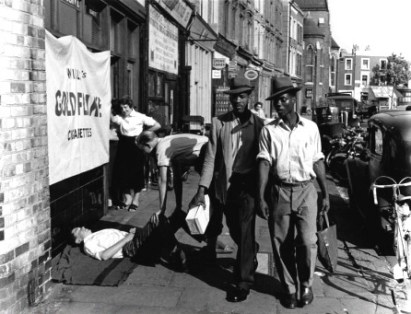
Additionally the region had long been the province of choice of the continuing waves of Irish and West Indian immigrants. In Canute-like resistance to their settlement, glass-covered noticeboards outside tiny corner tobacconists and sweet shops were full of scribbled small ads offering single rooms to tenants, but making it clear that ‘no Irish or coloureds need apply’. One, I remember, stated with a frankness then commonplace, now horrific, ‘Sorry, no niggers or dogs’. However, their battle against the imagined horrors of miscegenation was already lost and, on Friday nights and during the weekend, the High Street boomed to the sounds of the Trinidadian steel band and early bluebeat and reeled to the skirl of the Donegal fiddle.
However, for all the incursion of new Londoners, in the early-to-mid ’60s Camden Town was still predominantly a district locked into the patterns and procedures of the pre-war years and Adam and I loved its furtive, monochrome seediness. Our evening itinerary had us wandering through a network of back streets, projecting our feverish imaginings onto scenes glimpsed through curtainless sash windows or at the edges of the wartime bombed sites that still lay open to the sky at that time – and indeed for quite a while after until the developers moved in. From shop doorways or alleyway mouths, we watched the traders in dodgy watches, bootlaces and horror comics, devising for them lightning biographies, the speculations trailing their rapid fading into the shadows with the appearance of a roving pairs of coppers.
Most of all we loved the overheated, smoky, single room caffs. All of our favourites were named after their proprietors – Ed’s, Norm’s, Wilf’s – and each had a small blackboard headed ‘Eats’ nailed to the outside wall or on a trestle on the pavement, announcing ‘Pie, Mash & Liquor, 2/-, Full Lunch for 2/6d’, or simply, ‘Tea & a bun for a bob‘.*
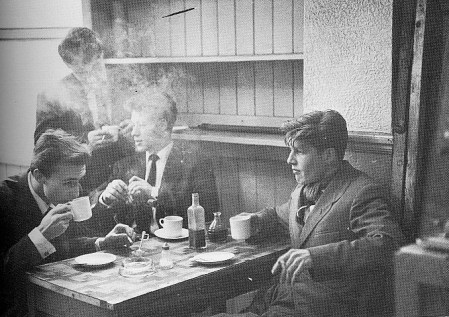
As on earlier boho rambles, Adam and I sat at a corner table in Ernie’s, half way down Camden High Street, hands folded round two thick china pint mugs of orange tea, smoking Old Holborn tobacco in licorice paper rollups, watching the unvarying spectacle through half-closed poet’s eyes. Around the yellowing walls were pictures of long-forgotten boxers with patent-leather hair and raised fists, some bearing faded autographs. The lighting was always dim – three or four 40-watt bulbs under green enamel shades. A Sporting Life calendar featuring a lissom greyhound for each month of the year hung above the doorway that led into Ernie’s quarters. When hunger struck – and poets have to eat occasionally – we would order a bacon roll each. The rolls were hard, spherical items, the white cobwebby centres contained within shell-like exteriors, which, if bitten carelessly, would send shrapnel crumbs flying. They would only pass successfully from mouth to oesophagus if lubricated generously with brown sauce. Something called Marloe’s Speciality, clearly brown but with the consistency of marine engine oil, was supplied to each table in sticky rectangular bottles. Ernie always had a Capstan Full Strength wedged into the corner of his mouth. Its trunk of ash would wilt cumulatively over the bread and toast he was forever buttering on the bar. But Ernie was a lifetime smoker and he knew the precise moment at which to turn his head to one side and with a brief double spasm of the bottom lip, drop it into the sawdust on the floor. When our money ran out we would push our chairs back and head for the door, always murmuring an unrequited “G’night, Ernie”, as if we were fully accredited members of his murky, taciturn club.
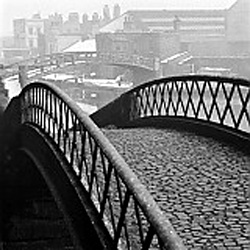
Leaving Ernie’s Adam and I would turn left and make for the bridge over the Regents Canal. As dusk fell we might be lucky enough to see a narrowboat laden with timber or coke sidling into the bank for the night. Or, if we hung around for long enough, a tart in a pencil skirt arm-in-arm with a client, scurrying along the towpath towards the shadows of the warehouses beyond Hampstead Road Lock. Hungrier more for the notion of decadence than its actuality, we watched them disappear and drafted the invisible brief encounter in our fevered imaginations.
As the street life was decanted into the pubs and the pavement traffic dwindled to mere transit between them, Adam and I saddled up into our by now well-crafted Wild West fantasy. Gripping imaginary reins in one bunched fist and slapping an invisible equine rump behind, we shuffled , sidled and scuttled along the pavement, mounted US army scouts on a vast back-lot of scrubby gradients, narrow trails and teeming rivers. “We’ll talk as we ride”, I would grate between clenched American teeth. “If we take the Twin Fork trail, we can head them off at the pass”, Adam would reply in kind. Then we would zig-zag north up Camden High Street, tugging our mounts’ heads back as we forded its tumbling waters, only clambering out of the saddle to draw breath in the narrow arroyos of Miller Street or King’s Terrace before remounting and galloping at full stretch towards the intersection between the High Street and Camden Road.
Few passers-by took any notice of two proto-adolescents in beatnik jumpers running sideways whilst slapping at their buttocks and we would rein in, panting and laughing as we drew alongside the Black Cap pub near the corner of Camden High Street and Parkway. Here we would pause, lingering near the doorway to breathe in the rich fug of tobacco smoke and stout and catch an intoxicating ten or twelve bars of an Irish jig, reel or lament through the flapping door.
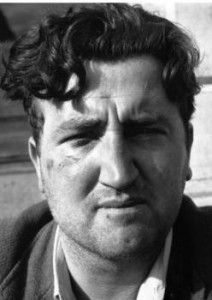
On that hot summer evening we sat ourselves down on the kerb in front of the wide-open Black Cap, smoking our our rollies and listening to a storming set from a fiddle player, an accordionist and a guy rattling the bones between deft fingers. Suddenly we were hauled to our feet by our shirt collars and swung around like the newly hanged by our captor. He was a big man in an even bigger trench coat, stained, rumpled and buttoned up to the neck. For all the violence of the introduction, he was beaming out of a massive, battered face under a wild breaking wave of black hair and his two bright blue eyes inspected us closely. “Sure, you’re not the prettiest, but you’ll do”, he said and depositing us back on the pavement he clasped us to him on either side and, three-wide, we barged into the crowded pub.
I remember little of the rest of the evening, never having drunk Guinness before. There remains in the back of my mind a set of Dionysian tableaux: Adam and I on either side of our host wedged between shouting drinkers on a bench whilst a statuesque redhead in a green dress flung herself sideways across our laps with a wordless cry, white-arms raised and bare legs kicking. A tiny ancient man with a gargoyle’s face dancing on a tabletop with torso as rigid as a guardsman but with feet flying. A man with boiled-beef jowels and a broken nose bellowing over and again into our captor’s face, “The boys at Killiney Castle!” and only retreating when proffered half-a-crown and told to find himself a glass of stout. Our new friend throwing his arms across our shoulders and kissing each of us moistly on the forehead.
But there is one sequential recollection that rises sharp and clear above the tangled skein of visual, aural, tactile and olfactory sense memories. It is of our quixotic host rising up from between us like Moby Dick within that ocean of carousing humanity and the company falling silent as at an invisible signal. Closing his blue, blue eyes he struck a pose and began to sing in a reedy tenor a song of such lyrical and melodic beauty that I have never forgotten it. I know it now to be that Irish ballad of universal valediction The Parting Glass and it remains one of my favourite songs.
Some time later that night we found ourselves on Hawley Road and on the step before Adam’s front door. As sentience began to return to us both, Adam shook his head in disbelief. “You do realise who that was, don’t you?” he asked as if emerging from a dream. I shrugged. “Haven’t a clue”. “Brendan Behan”, Adam whispered hoarsely. “We just got pissed with Brendan Behan”.
:::
Ernie’s is long gone now. He must have been in his 70s when Adam and I stopped off during our evening and nighttime ramblings. Over the following years the premises housed a series of eateries – an Italian restaurant, a Greek Cypriot meze bar, a Turkish Cypriot kebab joint. Four years ago after a long time away from NW1 I was walking down Camden High Street from Chalk Farm having just visited the Camden Lock part of the sprawling market that extends down from the Roundhouse. As I passed the corner on which Ernie’s had stood, I saw with dismay but no great surprise the green and black circle logo of Starbucks, and I caught a glimpse of wholesome Danish pastries, hoi sin duck wraps, girls in uniform black sweatshirts and the glitterati of 21st century Camden Town sipping their lattes. Nowhere in evidence was a chipped white pint mug full of orange tea to be seen. Not a single brown sauce bottle with its pumice-stone deposit around the top on a stained formica table anywhere in sight.
And as I approached Camden Town tube I looked up at the extravagant Alhambra gothic of the Black Cap pub. Smartened up beyond recognition, it had evolved into a gay cabaret and dance bar. Still the Guinness handles pulling pints at that time no doubt and still the frenetic carousing that, on a hot summer’s night, would have the clientele spilling out onto the pavement. Sadly it closed in 2015, but its swan-song would have been the wildly different but appropriately hedonistic Scissor Sisters and Titti La Camp hosting drag contests replacing a homesick fiddler playing the devil out of The Red-Haired Boy or a drunken gay Irish playwright gathering up a pair of boho wannabes and for an hour or two setting their callow dreams alight.
*2/- = two shillings, now 10 pence. A bob = 1/- (one shilling), now 5 pence. Half-a-crown = a large silver coin to the current value of 12.5 pence.
Pics (where traceable): Hulton Deutsch collection & the Museum of London library.
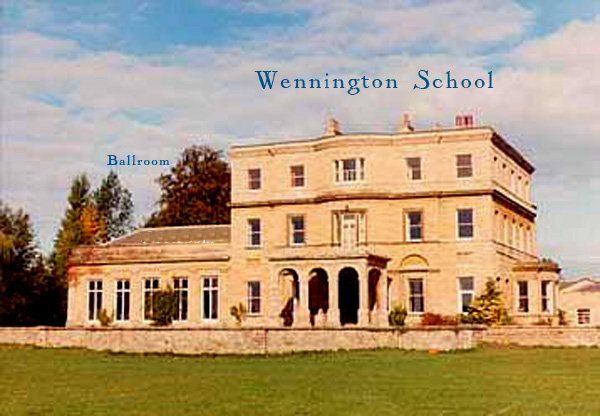
Wennington School, Wetherby, Yorks. Christmas Dance Thin snow floats in the honeyed light from the Ballroom window. A vixen shrieks from within the spinney across the field. It speaks of knives and violence. Shivering, I step away from the long window and peer into the night. This is for now my soundtrack rather than the dull pulse of Roy Orbison’s Running Scared that has the Christmas Party couples on the crowded floor sliding into each other’s arms for a slow dance. Teachers move swiftly through the lolling throng, some humorous, some affronted as they prise the couples apart. There, at the epicentre, Kingman and her, slung together like drowning creatures. He has his face buried in her dirty-blonde hair; she’s smiling, eyes closed. Such pain, this time in the throat. Because that’s where (as I read once and cherished) the tears are brewed.
And it was me who set it up. I carried the note she wrote in Assignment Time – a stubby pencil gripped tight; she let you watch her trail the looping letters across the lined paper. ‘…I just want to know where I stand cos I really like you and I know you thought I did but not in that way…’ Secretly I despise the barren language, the tiny hearts dotting each ‘i’, the doe-eyed cartoon princess faces in the margin and the fact that he’ll read only romance into it. She asks me does it sound right and I say yes, yes, it does. Will you wait, she wants to know, while he reads it and then will you bring the reply and leave it on the Girls’ Landing just before lights out, under the mop bucket by the banisters? Yes, I will, of course I will. She touches my hand with her fingertips and tilts her head in that way she has. Momentarily appalled, I wonder if she has any sense of how I feel. No, surely not. She likes me but not in that way. It’s like I’m her brother. She only has sisters; she’s so glad she’s got a brother now who she can talk to. Catlike, she stretches her legs out under the table and pulls her skirt up to her thighs. Her legs are bare and downy; she wears white ankle socks. A shudder goes through her and I know she’s thinking of him. She glances at me sideways and smiles thinly.
I try to tough it out in the Ballroom. I sit with Gerry and watch the Sixth Formers jiving. He reckons that Dalia isn’t wearing any knickers and every time she spins away from Paddy Brassington and her skirt whirls up around her waist, Gerry ducks down like he‘s tying his shoe. But I can’t concentrate, either on Dalia’s state of possible undress or the music. (Diddy Bell is spinning the discs and he slips in some raw rock’n’roll – Gene Vincent singing Who Slapped John?) Because suddenly they’re not in the Ballroom. Everyone else is there – all of the 4th and 5th Form, and Roger was taking a register. But I know where they are because Kingman told me last night after lights out. The five of us lay in our beds letting the day fall away. Gerry was under the bedclothes trying to tune into Radio Luxembourg. Remus and Eddie were lying across their beds, sharing the narrow light of a pencil torch. Remus was shuffling his stamps around while Eddie studied his football programmes. Kingman was on the top bunk; I was on the bottom. I knew he was lying on his back with his hands under his head. The bunk creaked as he stretched luxuriously. Yeah, he murmured. Ten minutes in the locker room just after the dance starts. We won’t be missed until Rog does the register and we’ll be in by then… We were still then, each one of us alone with his thoughts.
The snow thickens – big, flat, white shapes, yellowing in the window light. It begins to settle on the low stone wall at the edge of the terrace. I despise everything about Kingman. His cow-eyes. His weird, looping walk. The way he smokes a fag, with the tip pointed into his palm. His Adam Faith hairstyle. That he has kissed properly; that he has been kissed back and I haven’t. I shamble across the gravel and stretch out full length along the wall. Maybe the patina of snow shrouding me by the second and the cold damp seeping through my clothes will shrive me, make me whole again. My face crumples and tears start, refracting the filtered light, making of the world a dream place. I sigh in a luxury of pain: I’m utterly alone and yet I’m on a stage, both actor and audience. Let them find me here tomorrow in my white winding sheet…
Wennington School, Wetherby, West Yorkshire. Kings Cross Station in September. Bars of yellow light from the skylights in the great curved roof, falling through steam. The London – Leeds express. The doors in the long maroon carriages stand wide open, concave against the gentle swell of their sides. Parents and porters heft bags and suitcases up from the platform into the Wennington School carriage. Kids clamber past them either way, shouting and gesticulating. Others wedge their faces into the small open spaces of the window quarterlights.
Geoff and I head down the platform towards the locomotive. It’s a green 4-6-0, the white-painted lamps positioned at either side of the buffer bar indicating that it’s a passenger express. We’ve read that dreary diesels are to replace the steam locos that, as tiny kids, we longed to drive and this may be our last close encounter. Up in the cab, the fireman is wiping the water glass with a dirty rag. Wisps of steam curl around the cab roof. The driver glances at his watch and then leans out of the cab to check it against the platform clock. Geoff hits my arm and races back towards the school carriage. Momentarily breathless with exhilaration, I follow him, skidding to a halt in front of Mum and Dad who are standing patient guard by my overnight bag. Mum smiles uncertainly and brushes a tear away with a knuckle. Only as the train jolts forward and the tableau of myur parents slides out of view of the window do I feel a corresponding jolt of isolation and loss.
As the train speeds across the bleak fens north of Peterborough, I play poker with Geoff, Adam and Bridgey. I win 1/10d and Geoff and I lurch along the corridors towards the buffet car, pausing only to straddle the rocking concertina doorways connecting each of the carriages on the way. As you push your way into position with legs and back you can see through the gaps between the footplate to a blur of sleepers racing past. We each buy an iced bun, cramming them in whole to see who can finish his first without laughing the contents onto our maroon jumpers. And then, still hysterical, I lean out of the drop-down window in the carriage door, shrieking into the gouts of steam and motes of soot streaming back from the labouring locomotive.
Within the close confinement of the carriage, the rhythmic hammering of the wheels, the spectral blur of the passing landscape, time arrests. I’m strung, weightless, between my two worlds, domestic and scholastic, the plunging momentum of my life suspended. All my teenage self senses in this moment of repose is a coveted comfort relinquished, a complacency challenged and the cataract of events ahead, external and internal, that must be encountered head on. To be able to slip into the current for a while before striking out is the means whereby we flourish or falter. This I know as a dumb, wordless truth. For all that, I know too from before that there will be times of unanticipated confusion and despair. Such episodes will come spinning and whirling out of nowhere like personalised tornadoes and I shall be absorbed into their vortices. But there is, even here and now in the arrested moment where intuition and guesswork over reason and experience guide me, a grim acknowledgement of the wisdom that comes from pain…
NOTES: 4-6-0 : The locomotive’s wheel alignment – a bogie of four wheels and six driving wheels. Water glass : Pressure gauge. 1/10d : One shilling and tenpence (approximately 15p.)




 sisyphus