
“Education, education, education!” Tony Blair cried 22 years ago as we were promised root and branch change within primary and secondary schools. And there was a massive financial investment in education resulting in a significant increase in the number of teachers, the creation of the teaching assistant role, a decrease in class sizes, particularly in the primary sector and an increase in GCSE and A-level results. But as time went rapidly by we saw the entry into the process of reform and reconstruction of private educational initiatives within the state infrastructure, the creation of the notion of the ‘bog-standard comprehensive’ and the stigmatisation of struggling mainly inner city comprehensives as ‘failing schools’. And if anyone had drawn hope from Blair’s excelsior call back in 2007 that there might be a fundamental shift in emphasis away from the vigorous quantitative drive towards results to a qualitative emphasis on creativity, individual enterprise, authentically child-centred education out of which real personal choices might be made, then deep disappointment was swift and lasting.
And what lies before us as the most right-wing government since the Thatcher administration of the ’80s beds in and begins to look around? Surely only the substantiation of the arid, punishing, results-orientated curricula that dominate both educational sectors now.
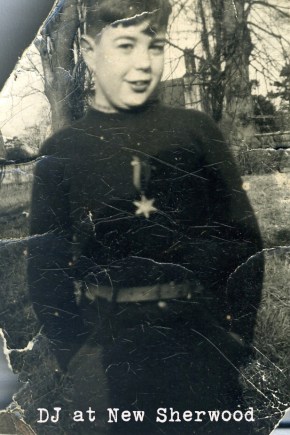
How incredible is it, then, that to seek out radical alternatives we have to go back to the future? What follows are two autobiographical accounts of experience in the 1950s, each one providing an account of my life and times in a small, independent progressive school in the lee of Epsom Downs. Even today, when occasionally in company reminiscences of schooldays arise, my depiction of New Sherwood School can provoke shock and disbelief. ‘But how did you have any respect for your teachers, calling them by their first names?’ ‘Why didn’t you all run riot; I know I would have!’ ‘Voluntary attendance at lessons? I’d have hopped off all the time!’ ‘Kids making up rules? How come you didn’t have daily chaos?’
Well, we did respect our teachers, as they respected us. And there wasn’t chaos, there was order, consensual order. This is how I remember it…
REMEMBERING SHERWOOD
Latchmere Road Primary School was a small, red-bricked, white tiled, parquet- floored establishment, safe, comfortable and traditional. With one or two monstrous exceptions, the teachers were kind and supportive. The headmistress of the infants’ school was archetypically maternal; the headmaster of the junior school was avuncular. It was a stable, happy school. And I was utterly miserable there.
After so long a time it’s difficult to identify what frightened and oppressed me most. I have murky recollections of asphalt wastes patrolled by fierce, bulky boys smelling of penny chews and unwashed clothes. Their sticky hands pushed you hard in the chest; their scabbed forearms compressed your windpipe, locked your head to their panting chests in dispassionate and unmalicious aggression. Asexual voices bayed and shrieked, whistles blew and ragged queues formed. Boiled meals reeked and steamed; you had to eat the beetroot, the pink mince, the frogspawn semolina. Incomprehensible prayers and sermons were uttered from the stage; discordant hymns punctuated the ritual, and we filed out to Sheep May Safely Graze played on an upright piano by a fierce little woman with hair coiled in cartwheel plaits over her ears…
The safe, predictable, instantly identifiable atmosphere terrified me. Why, I don’t know; the passage of time and the depth of the imprint defy analysis. But my mother tugged me onto the 604 trolleybus every morning, both of us in tears, both of us anguished and baffled. At night I dreamed about corridors, classrooms, the banshee voices of wild children. By day I cowered in corners, hiding from the pounding, reeling jungle of it all. Without recourse to the post-‘60s label, ‘school phobia’, my parents had a problem on their hands: if I was rejecting school at the age of seven, in what educational condition would I be by the time that the implacable social and intellectual divider of the 11-plus exam stood between me and secondary education
A mildly radical past and a subscription to the left-wing weekly the New Statesman provided a possible answer. As a pipe-smoking, corduroy-wearing member of the Independent Labour party in the 1930’s, my father had read Neill’s prototype Summerhill book That Dreadful School. Recollections in the ’50’s of its cheerful, vernacular style and refreshing absence of cant were jogged by a small ad on the back of the New Statesman publicising a little independent progressive school in the nearby market-town of Epsom. It was called New Sherwood School and in the summer of 1953 we drove in Dad’s new Morris Minor to see the school and meet its headmaster John Wood.
The school was housed in a large, white, mid-19th century lodge in about an acre of grounds with a two-acre paddock attached. As we drove in through the front gates, the sense of a sprawling, bohemian family environment was immediately apparent. Thick climbing ropes hung from trees; there was a wooden climbing frame built against the bole of a huge beech tree; three gaily-painted cart-wheels mounted horizontally on three-foot high posts acted as roundabouts; doors in the house bore scuff-marks and windows were patched with corrugated cardboard. John Wood approached us along the gravel driveway that surrounded the house and he guided us over to the roundabouts. The interview was entirely informal: John – bearded, tieless and kilted, a dead ringer for Rob Roy – chatted gently about the philosophy and practice of the school, pushing himself to and fro on the wheel. Behind us, a tiny, dark-haired boy of about six ran tirelessly around the house, pausing only to yell, “Fuck off!”, as he approached our small group. Initially, John ignored the demonstration. After one particularly shrill utterance John smiled and remarked that Mikey had only just learned the phrase and that we mustn’t take the invocation too seriously.
So, in the autumn of 1953, I joined the sixty-odd pupils at New Sherwood School as a day-pupil. My initial reports home were ecstatic: no more beetroot, no more asphalt battleground, no more booming corridors, no more hymns. My perception of the school was determined at first by what it didn’t have. My experience was all of freedom FROM and, in my early days, I could make little sense of the implications of freedom TO. Day-to-day life was a process comprising fitful attendance at the voluntary lessons and long, absorbing periods in the sand-pit building castles and railway systems.
Time passed and the old horrors receded completely. I made friends and found that my fear of sport and competitive activity was offset by an ability to initiate and sustain imaginative games. When, after a year, I began to board, my relationship with, and understanding of the nature of, the school deepened. Slowly I began to recognize the teachers and other adults as congenial individuals, much as were one’s parents’ friends. Increasingly I came to see them as larger, wiser versions of us, providing security and support and yet immediately responsive at the intuitive, affective level at which we children operated. (John and his wife, Irma, would tend to refer to the adults in the community as ‘big people’, this somehow expressing the differentiation between staff and pupils in terms of physical size rather than status). It became apparent that I could argue with teachers and that they would respond in kind; that I could wrestle with them, or fall asleep with my head in a lap; that in calling them Ted or Mary or Gerry I was permitted an intimacy of contact that bridged the interstellar distances that I perceived to exist at Latchmere.
The functional life of the school fell into three main categories for me: lesson-time, the School Meeting, and boarders’ free time after the school day had finished. Lesson time followed a fairly conventional and thus familiar pattern during the school day. By School Meeting decree the lessons were voluntary, although, out of fairness to the teacher and the rest of the class, the absentee had to announce his/her intention to miss lessons and then had to remain out for the remainder of the week. The lessons provided some shape and focus for the day and they were well-attended. Missing lessons tended to occur collectively when something clearly more important than lessons came up. During one term, virtually the entire school population gave over two or three weeks to the building of a stockade in the paddock. At other times activities like school plays needed extra work and they replaced the scheduled timetable. I have a clear recollection of both those lessons that entranced me and those that brought back the sense of oppression that blighted my previous school experience. History and English fed my imaginations; Maths filled me with a claustrophobic sense of failure and hopelessness that even the congeniality of my environment could not dispel.
The aspect of community life that established most manifestly the functional equality of children and adults was the Friday School Meeting. Modelled on John and Irma’s experience of self-government at Kilquhanity (where both had taught previously), the meetings were chaired, and minutes were taken, by pupils. All those who attended had equal voting rights, regardless of age or status. In principle, and sometimes in practice, children could outvote adults. Initially, this reality appalled me: this disempowerment of those who legitimized our existence seemed a heresy of the first order. But within a short time it became a normal aspect of life at New Sherwood, its processes facilitating, rather than impeding, the social order. Indeed, it was John Wood who proposed the abolition of all the school rules in order to re-legislate from scratch and it was the pupils whose caution moderated the proposal.
After 4.00pm the school belonged to the boarders. Numbers fluctuated between eight and ten in my five years at the school, accommodation comprising three rooms and a pre-war caravan. With such small numbers, the family ethic that lay at the heart of the school flourished most effectively. We all dined together, bathed together, lay around John and Irmas’ bed-sitting room floor listening to Journey Into Space and The Goon Show, bickered, sulked, wooed each other back into the fold, and grew from childhood towards tentative adolescence together. My chief recollection – lent enchantment by the distance of years – is of the enormously elaborate fantasy games that we played around the building and grounds. Each context carefully chosen, each scenario carefully prepared, we would dress up in an approximation of the appropriate costume – American Civil War, Second World War, Arthurian myth – and launch ourselves into late summer sunshine or evening winter snow. The adults that we encountered in our unimpeded activities would be pressed into service. Gerry, the English teacher, caught relaxing in his caravan, would become Gandalf, from our favourite book of the moment, The Hobbit. Long-sufferingly, he would re-create the voice he used when reading to us before lights-out. Mary, the Bavarian cook (whose English husband had been a prisoner-of-war), would tolerate – even indulge – our insensitive representations of ‘typical’ German behaviour when rounding up our war-game captives. Obligingly she would goose-step into the kitchen, wearing one of our most cherished props, a genuine German infantryman’s helmet, to make us massive cheese-and-pickle sandwiches for supper. We would go uncomplainingly to bed, still in role, exhausted from our labours in the other lands and other times that were encompassed by the small New Sherwood estate.
I left when the Woods emigrated to New Zealand, and went to Wennington School in Yorkshire. The advent of my teen years, 16+ and 18+ exams, the more formalized structures of the school drew a curtain across my time at New Sherwood. I lost touch with my friends there (although my family maintained contact with the Woods) and the school closed not long after I left, unable to find alternative premises when the lease on the estate was not renewed.
A few years ago I revisited that little corner of Epsom and found the surrounding roads more or less unchanged. The estate itself had disappeared under high-intensity housing; neat gardens and mock-Georgian fascias reside where once beeches had accommodated tree-houses and uncut grass surrounded sand-pits. In mid-1993 a letter from Irma announced that John was dying of cancer. With customary courage she faced this event and after it she sent a videotape of John’s memorial service around the scattered New Sherwood community. The various tributes to John’s ingenuity, imagination and vision recreated vividly for me the qualities of that unique little community. As I parceled it up for the next recipient, this educational ‘samizdat’ document bearing revolutionary good news, I reflected on the acute need for hope and action on the part of those of us who look upon the educational wasteland and are tempted to despair. I thought of Joe Hill’s great cry, “Don’t mourn: organize”, and – in spite of the torpor of middle age – I felt the blood quicken…
Reprinted from the Friends of Summerhill Trust Journal, Summer 1994

:::
HOW TO BUILD A SCHOOL
What do you do when,
from dream to mortar,
you build a school?
Is it like building a house
with the values locked
into the discipline of bricks
on bricks? Or is it like
the building of a church,
into which somehow
you must incorporate
the numinous, the hushed,
the obedient? (Here
the story’s easier to tell
behind rich windows, in
the organ’s smoky voice.)
Or is it like a glass
solarium, prima vera
all the year, an investment
of light, the incubator’s
catechism chanting hare’s foot
weeping fig and fern
towards glory; fruits exotic,
hand-reared and fat
and green, each one.
:::
Don’t build. Just find intact
(albeit cracked and leaky)
a house that’s there already,
one that’s rooted
firm and knows its skin;
that’s free of pain
and ghosts, with trees
and half-forgotten gardens,
mossy cold-frames, twisted
vines and sudden sundials
in the long, uncultivated
grass. Then let us blow
like puffball parachutes
in a random wind,
the achene fruit
that falls and germinates
when and where
it will.
:::
A DAY AT SHERWOOD.
Friday. It’s 6.30 in the morning. The racehorses wake me. They walk them from the Roseberry Stables, round Worple Road and up onto the Downs. My caravan’s parked against the high wall at the edge of the school grounds, and every morning they come along the lane high stepping and snorting, sometimes shuffling nervously, quietened by the grooms’ gentle voices.
I lie in the narrow bed. Another full night’s sleep. During the few weeks since the beginning of term when John and Irma moved me from the boys’ room to the old caravan, the insomnia has ebbed away, and with it the fear of the night’s long flood tide. Out here, once the light is off, the darkness is total. And within those first few nights while sleep still eluded me, I could hear the screech owls calling from the big beech tree in the Paddock. Once, in the small hours, one landed on the roof. The spread claws skidding as it landed woke me. It called twice – a haunting whistle on a falling note – and then took off. My fear then was real. But it was a gut sensation, visceral. Not the spectral terror of being alone in a night that will never end. I fell asleep oddly comforted.
7.00. I scramble out of bed and pull on jeans, a shirt and a jumper and my wellingtons. My breath clouds the air. I run across the dew-heavy grass to the side of the house, stopping by the kitchen door. An old ship’s bell hangs in the angle between two walls. It’s shaped like an inverted bowl and resting against its upper edge is a hinged clapper. I relish this moment of my appointed office, lifting the clapper slowly. A shiver passes through me and I slam the clapper against the bell, seven slow strokes. The sound, importunate, officious, thrills me even as its volume makes my eyes water. I take the stairs in twos and, bursting into the boys’ room, I jerk the curtains wide and tug the bottom half of the sash window upwards.
– Wakey, wakey, rise and shine! I yell.
Somebody throws a slipper at me; it hits the upper windowpane. Down the corridor I can hear John and Irma’s lavatory flush. Outside on the landing one of the girls – Miranda, probably; she’s an early riser – yawns extravagantly and slams the bathroom door.
7.45. In the kitchen Mary stirs thick Scottish porridge in a huge aluminium saucepan. She steps back to peer through the doorway into the Scullery.
– Who’s here now gets to eat, she announces in her dense Bavarian accent. Who’s late gets it all cold.
John comes in, scratching his beard. He wears a shapeless cable-knit jumper and his Hunting Stewart kilt.
– Hulloo, wee-‘uns, he greets the kids. As he walks past Hessie’s tilted chair next to yours, he grabs it and holding it firmly, tips it swiftly backwards to the floor. Jessie tumbles off it and seizes John’s legs.
– Are you on duty, John? he asks, pulling himself up.
– For my sins, yes, I am, John answers, entering the kitchen. Tea, please, Mary, black as tar and twice as thick!
9.35. Gerry watches his English class racing towards the shed for saws, hammers and nails. Under his arm is King Solomon’s Mines, which he would have read them had they not called the lesson off. In fact, there were to be no lessons at all this Friday. Strictly speaking, a day’s lessons could only be cancelled by a majority vote in the School Meeting the week before. But during the holidays several beech trees on the Ashley Road side of the Paddock had had to be cut down and now that the branches had been sawn off and stripped, the plan was to build the biggest camp yet. In company with all other teachers with scheduled lessons, Gerry accepts force majeur and lets them go to join the others, jostling and yelling. But he tells them in the few impatient seconds between announcement and release that he intends to bring them all up in the Meeting that afternoon because they are breaking a rule that has been declared by the entire community.
12.20. I can’t choose between labouring packhorse or Canadian logger as I seek out a role, hauling two long, ragged branches across the grass towards where the camp is to be sited. As I wrestle them into the loose heap and shake off the ropes I can smell the sweet, juicy fragrance of freshly sawn wood.
Already several shorn branches are seated upright in a long, deep trench and Jules is pounding them into the earth with a rubber-topped mallet while Robbie nails crosspieces in place to bind them together. Supporting the branches gingerly are Mikey and Miranda. Jules is teaching them a song in his almost impenetrable Ayrshire accent. With the precision of a chain gang chorus leader, he bawls the strange lyrics on the downward stroke of the mallet:
– Wha’ saw the tatty howkers? Wha’ saw the eenawar? Wha’ saw the tatty howkers, workin’ in the Broomilaw?
I lean against the trunk of the big beech around which the camp is being erected. Jules pauses, downing the mallet and leaning on the upturned handle.
– Now, he says, catching his breath. The next bit’s the best bit so listen, right? Some o’ them had bums like beetroots, some o’ them had een at aw, some o’ them had cocks like carrots, working in the Broomilaw.
Everyone laughs too loud, shedding tools and falling upon one another. I grin and make my way back to the woodpile for more branches.
4.10. Lunch is taken in shifts, the keenest builders carrying their plates out to the site. Eventually Mary brings the saucepans full of macaroni cheese to the Paddock and serves the workers in situ. By 4.00 a few day pupils drift away to collect their bags and go for the bus home. Reluctantly, the remaining work force moves away, wandering back towards the school building. School Meeting starts at 4.15 and John has asked that as many attend as possible because he has an important matter to raise.
As I reach the hedge that separates the Paddock from the old tennis court and the frontage of the house, I turn and look back at the day’s work. A ring of stout branches, part woven and part secured by nailed crosspieces and rope, contains the beech tree within a pygmy stockade. A frisson of excitement and pride trips my breathing for a moment. One more full day’s work to be done…
4.20. The Big Room is full. All the boarders are present and the majority of the day pupils and teachers. Most, like me, are perched on the tiny blue kindergarten chairs that line the walls. Only the Chairman & Secretary – Peter and Janine – are seated in comfort on a pair of winged library chairs behind a low table. John is seated, leaning against a closed door, cradling Cordi, who is only 4. Irma sits cross-legged beside them.
Peter raps the table with the side of a ruler.
– Order! he calls in his high unbroken voice. I’m opening the meeting at…4.20. Janine’s going to read the minutes of the previous meeting.
Mary had complained that a loaf of bread had gone missing from the larder. The Meeting directed the guilty parties to own up immediately. Jackie & Dilly admitted to having removed it and both were fined 1/- each and denied jam allowance for one week. John had said that boarders had been seen climbing on the downstairs toilet roof. The tiles were not secure and if anyone slipped and fell the school would be liable for any injuries resulting. He wouldn’t ask the Meeting to support a proposal for any kind of action in this instance; he just hoped that the boarders would be sensible in future. Robbie, Mikey and the Burch twins had proposed that there should be a rock-and-roll hop for pupils and friends for the weekend after Half Term. Gerry had asked if teachers and parents would be allowed to attend.
– Any matters arising? asks Peter.
Sally Burch raises her hand.
– I’m not going to the hop if my parents are going to jive! she declares. And teachers too! And I won’t be the only one! It’s just embarrassing!
The Meeting defeats a motion to ban all dancing grown-ups by a narrow majority and moves on to new business.
John raises his hand and is acknowledged by the Chairman. Still cradling the sleeping Cordi, he stands.
– I should like to suggest that we abolish all school rules forthwith, effective as of this Meeting.
He pauses. A ripple of shock passes around the room. A few kids laugh. I am appalled: a thin line between the silent, invisible machinery of ordered freedom and downhill chaos is about to be crossed.
– Do you have a seconder? asks Peter.
John leans down and gently passes Cordi to Irma.
– Well, it’s not a proposal at this stage. I simply feel that we have too many rules now and that to try to pick our way through all of them piece by piece, weeding out the unnecessary ones, will be too time consuming. So why don’t we just scrap all of them and start again?
He sits down. For a moment the Meeting is still. Then, one by one, hands go up, some assertively, demanding attention, others more tentative. Peter inspects the display.
– Gerry?
– I’m not out of sympathy with John’s suggestion. But before this gets any closer to going to a vote, am I in order in bringing up my English class from this morning for breaking the cutting lessons rule? I think they should be fined and if we sweep away all the rules in one go right now, an important principle’s going to go with them.
Peter leans towards Janine and they consult for several seconds. Peter straightens up.
– No, Gerry, you can’t. We have to finish this business before we can go onto new stuff.
I realise with a sort of disembodied surprise that my hand is raised. Peter’s cool scrutiny passes around the room.
– Rich?
I swallow hard. When I speak my voice sounds alien, as if someone close by is mimicking me.
– But if we’ve got no rules at all then why would anyone…what would stop anyone from, like, breaking a window or, say, smashing down a camp..?
John smiles and begins to address me directly.
– Through the Chair, John, Peter interjects sharply.
– Sorry, Peter, through you. Now, that’s a fair question and I guess the immediate answer would be nothing at all. But here’s the crucial issue: no one person here at Sherwood has ever put together a list of rules and regulations and said, ‘Right, everyone, here’s what you’ve all got to do and you do it or I’ll tan your bum…’
The little kids all laugh. John takes a short step forward and leans an elbow on the fireplace mantelpiece.
– We make the rules. All of us. Together. From the wee kids right up to the grown-ups. And we do things that way because we all know that the rules we have make sense because they’ve come from what happens to us in our daily lives. So – safety, health, convenience, thinking about each other and not just ourselves. Each good rule grows from these sources. I think we’ve got a bit carried away recently and we’ve gone from saying no-one’s allowed to leave school by the main gate because it’s on a bend in the road and it’s dangerous, to things like if you spill sand more than a foot away from the edge of the sandpit you have to pay a 3d fine. And I think that’s a bit crazy. So I propose we dump the lot now and go back to the starting line. No rules, then good rules.
John turns and sits, lifting the still sleeping Cordi back onto his lap.
– Do we have a seconder? Peter asks the Meeting.
My actions still apparently governed by remote control, I raise my arm. Janine scribbles my name in her notebook as the debate breaks on a tideline of waving hands.
9.30.
– Wha’ saw the tatty howkers…? Jules howls as the boarders climb the stairs for bathtime and bed. Ruth, on bed duty, grimaces from her doorway. I carry my wash bag and towel, granted first ablution privileges so that I can make my way out to my caravan. As I clean my teeth in the basin I can hear five voices at various stages of pubescence following Jules’ lead:
– Some o’ them had bums like beetroots, some o’ them had een at aw, some of them had cocks like carrots, working in the Broomilaw…
It’s a fine autumn night under a full moon. Silvery light shines around the gaps in the rudimentary curtains. I lie staring up at the curved ceiling of the old caravan, wide awake but free from fear. In the great beech in the Paddock, the screech owl quavers and I smile into the darkness.
Glossary
The Downs = Epsom Downs, site of the Derby horserace.
Wellingtons = Rubber boots.
‘Wha’ saw the tatty howkers, workin’ in the Broomilaw?’ = ‘Who saw the potato pickers working along the Broomilaw Road?’
‘een at aw’ = None at all.
1/- = One shilling in pre-decimal coinage. Value, 5p.
3d = Three pence (pronounced ‘thruppence’.) Value, about one pence.






 sisyphus